Katie Tupper on <em>Greyhound</em>, Self-Discovery, and Letting Go of the Chase
Emerging from the Canadian prairies with a voice that sits low, warm, and unbothered by expectation, Katie Tupper has built a career defined by confidence, emotional precision, and an instinctive fluency in soul.
Growing up in what she’s casually described as a “small, boring city,” Tupper found her way outward through the internet, using its vastness as a connective thread. Online, she discovered the music and communities that would shape her artistic language — neo soul, storytelling, and the freedom to exist outside of rigid archetypes. Without the pressure of scene or competition, she was able to develop her voice — literally and creatively — on her own terms, learning not just how to sing, but why.
That sense of self-trust has become central to Tupper’s impact. Open about her bisexuality and thoughtful about the politics of visibility, she occupies a space that resists easy categorization — queer without performance, vulnerable without spectacle. Her debut album, Greyhound, crystallizes these ideas, using the metaphor of the chase to examine cycles of intimacy, independence, and self-understanding. Rather than offering neat resolutions, Tupper allows complexity to stand as truth, making room for contradiction, growth, and emotional honesty.
In a society that often rewards volume over depth, Katie Tupper’s influence lies in her steadiness. She represents a generation of artists proving that authenticity doesn’t have to announce itself loudly to be heard — and that sometimes the most provocative thing a woman can do is simply trust the sound of her own voice.
KP: I’m a big music person, but my first introduction to your work was with your latest release. I was immediately struck by your voice, and as a fellow former two-pack-a-day smoker, I was like —yes. [Laughs]
KT: Okay, yes. You get it. [Laughs]
KP: I do! But in all seriousness, sometimes it’s difficult for women to find a home in their lower-register voice.
I spoke with sweet93 pretty recently, and she’s always had one of my favorite voices. She has such a husky tone with such a rasp to it, and she spoke about how difficult it was for her to find herself within her voice because it was so unique for a woman. She credited Stevie Nicks for helping her discover her own.
So I was wondering: having such a unique, incredible tone, did you ever struggle with it in any way? Or did it always feel second nature to you?
KT: I think I started singing before my voice dropped, before I hit puberty. I think I had a more normal voice then. But around the same time that my voice sort of landed in the deep spot that it is now, I was listening to Sade and Erykah Badu — all of the neo soul women.
The reason that I loved their voices was because they were so low. Singing their songs felt wonderful and natural, so I didn’t really question it. I remember people commenting on my speaking voice — how low it is — but thankfully it was never in a nagging way. It was always just like, “You have a very low voice,” and I’d say, “Yes, I do.” [Laughs]
I feel lucky that I never really felt ostracized for it. My voice hit its lower register when I was probably 15 or 16, which can be a crazy age, but I was kind of like, This is what I sound like. If you don’t like it, then I’m sorry. It’s not my problem.
KP: Well speaking of how externalities can impact your sense of artistry, environments undoubtedly shape artists’ visions and senses of belonging. Growing up on the prairies, as you did, surrounded by what you’ve described as a “small, boring city” you’ve emphasized the idea that everyone is from a small, boring city.
In what ways do you think coming from a less obvious place helped, rather than hindered, your vision as an artist?
KT: I think it was really nice growing up where I did, for two reasons. First, I think it was really lucky that I grew up in a small town during the age of the internet. I recognized early on that I felt limited in my access to culture in person, so I went online and found communities, music, and people that weren’t in my hometown.
That made me feel like I was doing something cool in my small city, especially because I was part of a really small group making R&B music. Even though it was the same music that people were making in bigger cities, it felt like there was no competition — no comparison. It gave me time to be on my own path of self-discovery.
Now, as an adult spending more time in bigger cities, it’s harder not to absorb other people’s sounds. You do a session with someone, and their writing bleeds into yours. That exposure can be amazing, but it’s definitely different.
Back then, I had this really nice cocoon to figure out what music I loved and what I wanted to make. It was good and bad, but mostly good.
KP: To spin off of that, you said that you wish someone had told you early on that geography and size didn’t matter with the internet. What advice would you give young musicians in small towns today?
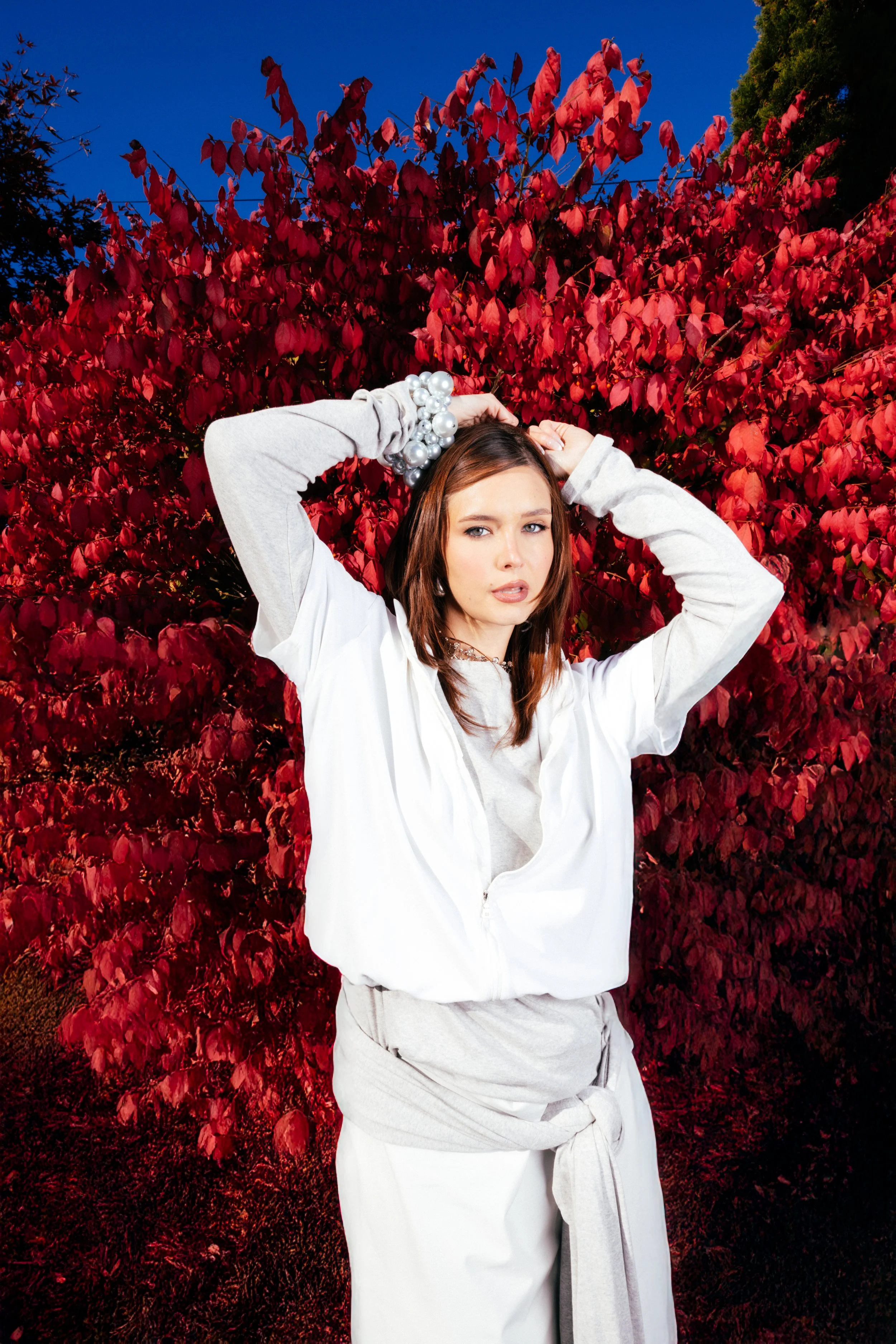
“You are the one who takes yourself wherever you want to go, so stop waiting to be discovered.”
KT: Just start. Try anything if you feel called to make art in any capacity. When I was really young, being a pop star felt like this huge, lofty goal — you had to be discovered by a man in a suit who handed you a golden ticket.
The reality for me was starting by posting videos on Instagram. Someone would reach out, we’d make a song, and those small moments added up to a career. People think that it’s bigger than it is, but it’s actually lots of small steps.
I didn’t realize that there were so many ways to be an artist. You can tour half the year and work another job. You can build something truly sustainable without being a massive superstar.
You are the one who takes yourself wherever you want to go, so stop waiting to be discovered. Put yourself out there so that your audience can find you. And figure out why you’re making music — if you love storytelling and singing, do it for you. If it connects with other people, that’s really beautiful.
KP: You’re not straight, nor am I, and I’m always inspired by artists who don’t fit the algorithmic “gay” mold. Many women struggle with identity because they don’t “look” queer. I think dismantling those archetypes is essential.
KT: Definitely.
KP: You’ve been very open about your bisexuality. What was your journey like, and was acceptance easy to find?
KT: I’m bisexual. I think it started with being a really good ally. I cared very deeply and stood up for queer people, and then I started questioning why.
In high school, I definitely had crushes, but patriarchy complicates everything. I questioned whether I was being performative, who my feelings were for, and whether I loved my friends or was attracted to them. Because I still loved my boyfriend, it took me longer to figure out.
I’m very lucky, though. I grew up in a very open household. When I tested the waters with my family, they were basically like, “We don’t care. Kiss whoever you want.”
Now, I’m aware of the privilege I have, especially since I’m currently dating a man. I want to be a good ally and a voice of support without taking space away from others. Bisexuals are queer, and we deserve to exist without explanation.
KP: As you just said, you’ve stated before that you want people to know that bisexual women exist. What has your lived experience as a bisexual woman been like, and do you see the conversation around bisexuality changing?
KT: I think that it’s important to talk about bi erasure so that people can live as who they are. At the same time, I don’t think that conversation should overshadow very real legislative violence against other queer and trans people.
What I do believe is that the attack should never come from inside the house. The queer community should extend empathy to each other, especially if we know what it feels like to have our identities questioned.
KP: I think that’s something that we could all agree on.
Let’s talk about Greyhound. The album uses the image of the greyhound and the decoy as a metaphor — being both the one who chases and the one who can’t be caught. How did that idea shape the emotional core of the record?
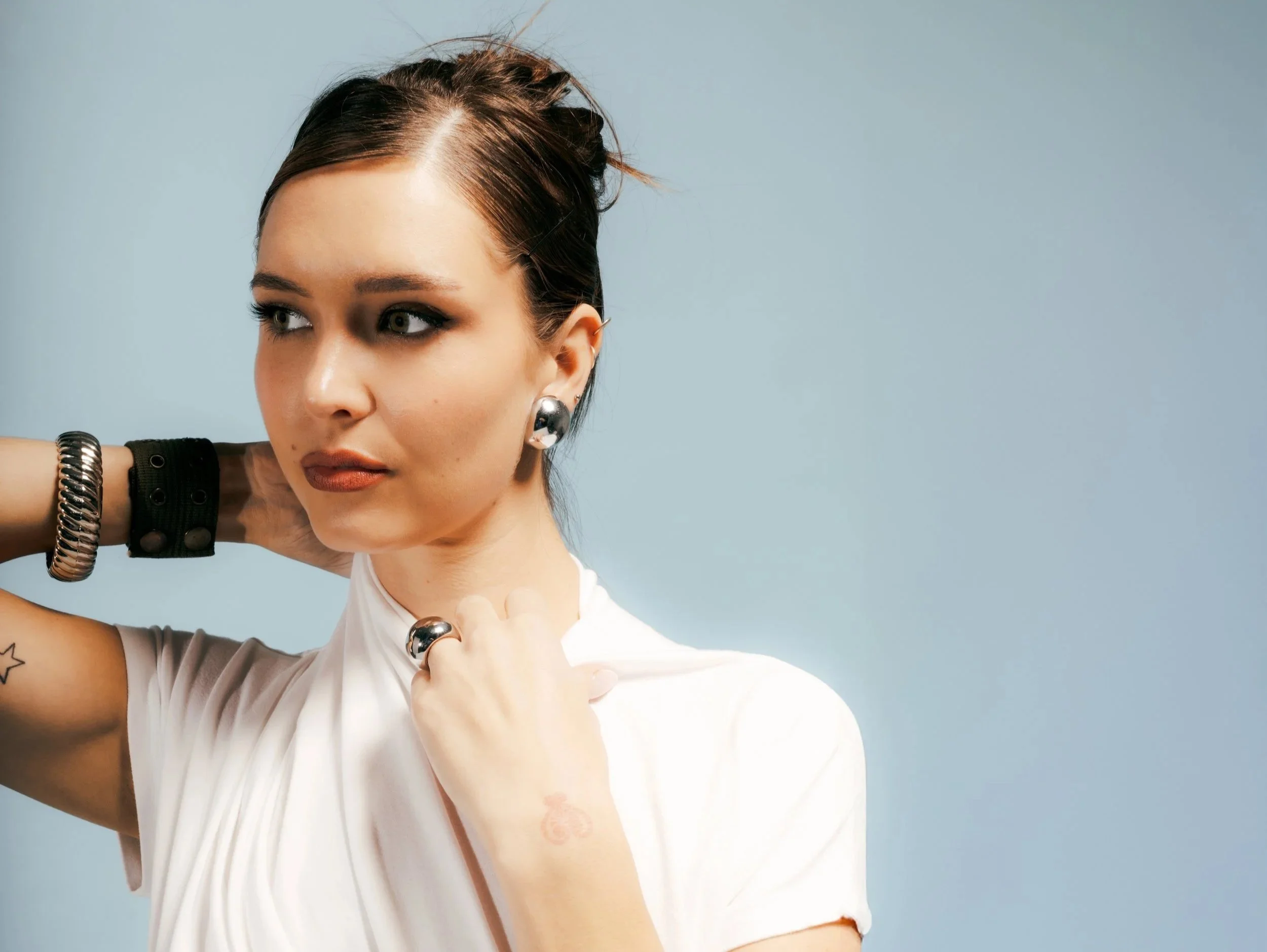
“Be louder. Lean into the empathy and listening skills that make working with women so powerful. That energy deserves just as much respect as masculine work culture.”
KT: I wrote a song called “Jeans” last summer, and one of the lines references a breakup — calling someone my green grass, my greyhound, my best case, my last chance. It was about realizing that the things we thought we were to each other weren’t exactly true anymore.
I didn’t expand on that imagery in the song, but I carried it with me while making the album. The idea of chasing something that will never catch up felt perfect for the themes in the record.
The album moves through relationships, coming-of-age, and identity, but that sense of cycles kept appearing. I’m someone who operates in cycles — not in a traumatic way, just consistently. Once I realized that, it was a relief. Now I know that for a few months I might struggle, then I’ll feel good again. Knowing that makes life a lot easier.
The greyhound became a mascot that I’m no longer ashamed of. Instead of asking, “Why am I like this?” I can say, “This is who I am, and now I know how to live with it.”
KP: Your latest single, “Right Hand Man,” explores experiencing someone’s codependence for the first time. How did confronting that dynamic reshape your understanding of intimacy and boundaries?
KT: When I wrote it, I was angry. I felt like I had been a good partner, and suddenly I was being turned into someone’s entire future. It felt suffocating.
With time and distance, I see it more as a lesson. People have different dependency styles, and I’m extremely independent — maybe too much. Instead of immediately backing away, I’ve learned to address it with empathy.
In that situation, it couldn’t work no matter what, but now I understand that people need to be loved in different ways. You just have to know if you’re the right person to do that loving.
That theme definitely carries through the album — not the specific person, but the pattern.
KP: Do you have a favorite track off the record?
KT: “Jeans” felt like a guiding star. But I also love the last song, “Cowboy Lullaby.” I hated country music growing up because I was only exposed to pop country. So we made a country song as a joke, but filled it with modern lyrics — my mom being an atheist, overconsumption culture, and open relationships — all these things that I feel like you'd never hear about in country music. [Laughs]
It’s funny and juggles multitudes. That’s why it’s my favorite.
KP: What would you tell your younger self?
KT: That I was right — you can make a career out of music. Believe that sooner. And you’re bisexual. Stop taking quizzes and just accept it. [Laughs]
KP: [Laughs] That’s great guidance.
What advice would you give to women in life, work, or love?
KT: Be louder. Lean into the empathy and listening skills that make working with women so powerful. That energy deserves just as much respect as masculine work culture.
And also — be a little meaner to men, but not women. Take up space.
KP: What do you feel makes a provocative woman?
KT: Doing what you’re told not to do — and doing it often.
Photography: Nathan Lau