Cynthia Sley on New York, Rebellion, and the Enduring Legacy of Bush Tetras
As the frontwoman of Bush Tetras, few artists have left as indelible a mark on New York's downtown underground as Cynthia Sley. At the forefront of the city's post-punk movement at the turn of the 1980s, she helped forge a sound that fused art-school experimentation, jagged rhythms, and an uncompromising refusal to conform. At a time when rock music — and its expectations of women — remained deeply conventional, Bush Tetras emerged as one of the era's most singular and influential bands, proving that originality could be more powerful than perfection.
Raised in Ohio before relocating to New York in 1979, Sley arrived just as the city's downtown arts scene was becoming a crucible for experimentation. Alongside guitarist Pat Place, bassist Laura Kennedy, and drummer Dee Pop, she co-founded Bush Tetras, a band whose influence would far outlast its commercial visibility. Their seminal 1980 single "Too Many Creeps" captured the chaos, tension, and gender politics of New York life with a directness that remains startlingly relevant decades later, while their androgynous aesthetic and instinctive approach to music challenged prevailing ideas of what women in rock could look and sound like.
Bush Tetras' impact has echoed across generations of musicians, artists, and outsiders drawn to their fearless commitment to creative freedom. More than four decades after the band's formation — and following the loss of longtime drummer Dee Pop in 2021 — Sley continues to write, record, and perform with the same curiosity and conviction that first brought her to downtown New York. This fall, Bush Tetras return to the stage with performances at the Getty Museum in Los Angeles on October 4 and Space in Portland, Maine, on October 29, continuing a legacy that remains as vital as ever.
For Cynthia Sley, music has never been about fitting into convention, but about creating without permission. Over forty years after helping redefine the possibilities of post-punk, her work remains a testament to the enduring power of artistic freedom, fearless experimentation, and the courage to defy every status quo.
KP: You grew up in Ohio and became part of New York City’s downtown arts and music scene that would indelibly define a generation. What was your relationship with the city as a young woman, and how did it shape your imagination?
CS: I remember the first time I came to NYC at the end of 1978. I was friends with Jim Jarmusch, and he helped me get a room at the Empire Hotel through Columbia University. I walked down Broadway from the 60s to a small venue on Bleecker Street to see the Contortions for the first time — I knew Adele Bertei from Cleveland, who was in the band. It was a crazy show that involved an ambulance and some blood — compelling chaos! I was hooked.
Also, I fell in love with the city: I could walk everywhere! So many things were going on every night — it was cheap to live there, and there was the undeniable fact it was a weirdo artist’s Mecca. There was a vibe that anyone could do anything and maybe succeed at it but mainly just be a part of a “stick it to the man” collective. Many interesting artists came out of Cleveland, but everyone eventually chose to leave to come to New York. I moved there six months later.
KP: That’s incredible. As a native New Yorker born in 1993, I always find myself incredibly jealous of those who were here for that era. Undeniably golden, but feels — heartbreakingly — mostly bygone.
Before becoming the frontwoman of Bush Tetras, you studied art and were deeply involved in New York’s creative community. As you just mentioned, at the time, downtown New York brought together musicians, artists, filmmakers, and performers in deeply unconventional spaces. What do you feel made that environment so fertile for experimentation?
CS: I’ve often thought about why downtown NYC was so fertile for experimentation. I had studied art in Cleveland, and although I saw many great bands like Pere Ubu, DEVO, and Destroy All Monsters, there was such resistance from the establishment there. I was harassed for my kooky androgynous looks, shunned in art school for my unorthodox art projects, and was frustrated by the limits of where one could take one’s creative endeavors. It felt like everyone left the Midwest for the same reason: to let your freak flag fly! Rent was cheap, and the city was kind of abandoned by money-minded people. That left the creatives to take over.
KP: You co-founded Bush Tetras in 1979 alongside guitarist Pat Place, bassist Laura Kennedy, and drummer Dee Pop. What brought the four of you together creatively?
CS: I was best friends with Pat, Laura, and Barbara Klar. We did everything together. When Pat left the Contortions and formed what would become the Bush Tetras with Dee Pop, they initially recruited Adele Bertei to sing. It didn’t gel, and they asked me to join on vocals and percussion. I remember the first rehearsal… Pat had the first verse to “Too Many Creeps” and showed me how to phrase it. It just fell into place. Being close friends really helped our creative flow. They had other jams and lyrics; I had lyrics. We spent late-night hours in Georgio Gromelski’s studio working on those first seven songs. It was a true collaboration, and I was in heaven. I had done visual arts and fashion up to this point where there was no collaboration and was not ever really satisfied or fulfilled.
KP: I fled the fashion industry as well, so I very much relate to this sense of discontent or disillusionment that comes with it. We’re very fortunate that you diverged.
The band emerged from New York’s post-punk underground, a scene that rejected traditional ideas of what music could be. What did that freedom mean to you?
CS: We never felt judged in that climate of freedom, even as women. Most of us came from art school backgrounds, so it felt like a natural progression to make music, and music that was not traditional in any sense of the word. By not knowing how to read music or play instruments, there is an innate freedom and an opportunity to create new sounds. Growing up, you didn’t sit around as a young girl thinking that it was possible to be in a band, performing in front of lots of people someday. That was not an option. So it meant a lot that it was not only possible but also normal — and almost expected.
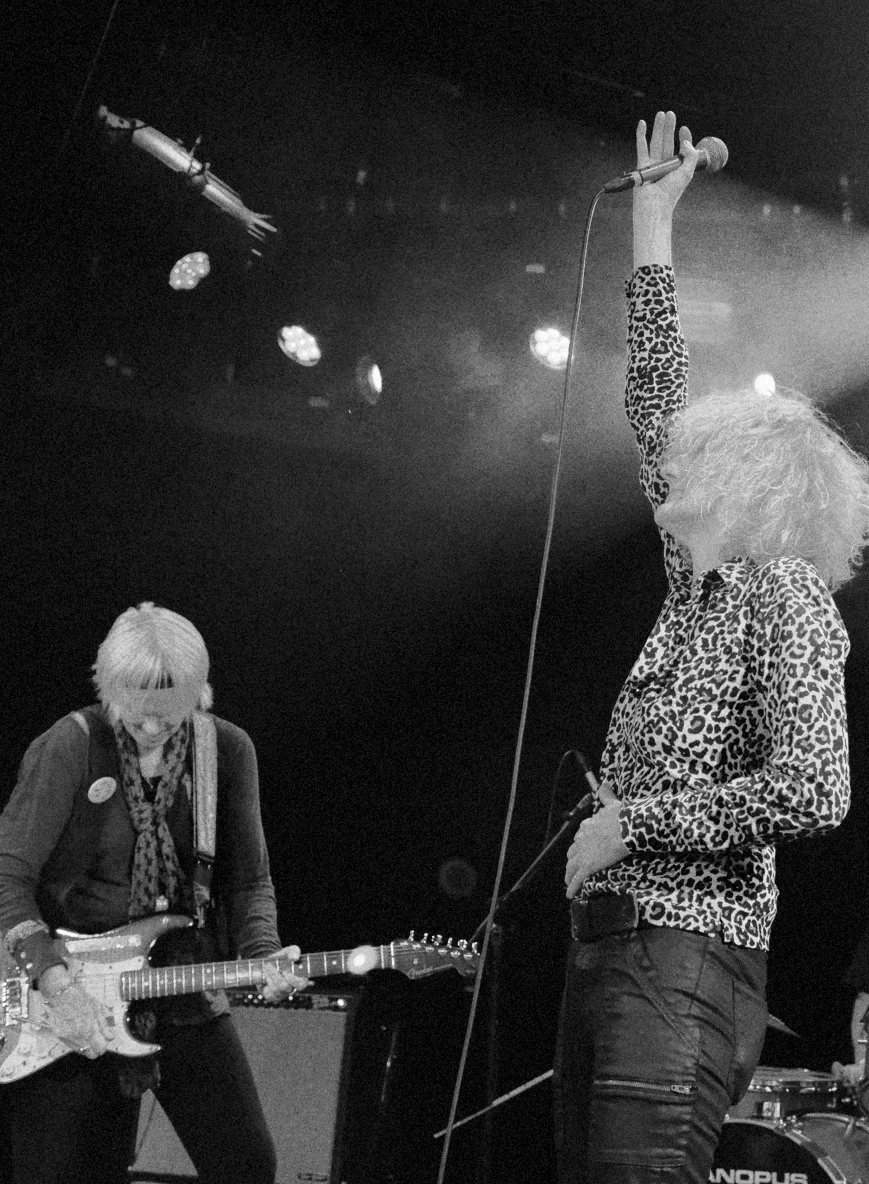
“Growing up, you didn’t sit around as a young girl thinking that it was possible to be in a band, performing in front of lots of people someday. That was not an option. So it meant a lot that it was not only possible but also normal — and almost expected.”
KP: That’s incredible.
And to return to your 1980 single “Too Many Creeps,” it became one of the defining songs of the downtown New York scene. It captured a very specific feeling of New York — chaotic, confrontational, and alive. For those who may be unfamiliar with its origins, what initially inspired the song?
CS: Pat and Laura worked at Bleecker Street Cinema in the box office and had to deal with all kinds of creeps — that is where the song was born. It was also a response to male harassment we had to deal with, of course.
KP: The phrase “too many creeps” has taken on new meaning across generations, especially for women navigating public spaces. Did you ever imagine that the song would continue to resonate decades later?
CS: No, I don’t think we ever imagined that the song would resonate decades later. It always amazes and thrills us when we have young fans of our music… It is sobering to see how relatable “Too Many Creeps” is to young women now. Misogyny is still alive and well.
KP: And thriving!
Your vocal style became one of the band’s defining characteristics. How did you develop your approach as a singer?
CS: In the beginning, I had to be coerced into singing, and, as it was, I was approaching the vocals as another rhythmic instrument weaving in between the guitar and drums. It was the bass that held down the melody, usually. As we toured and were performing constantly, I found that I was losing my voice often. I went to a vocal coach — who happened to be Professor Clemmons from Mister Rogers — who helped me sing from my diaphragm. That led me to sing more melodically while simultaneously Pat was learning more guitar chords. We both developed organically, as one does, but we work out our parts together, keeping that entwined sound.
KP: Revisiting your early penchant for androgyny, Bush Tetras often challenged expectations of femininity and performance. Did you ever consciously think about subverting ideas of what a female frontwoman should be?
CS: Absolutely! We had a highly androgynous look and didn’t play into the sex-kitten girl band vibe. I did wear the occasional vintage dress, but I wore it with combat boots! I’m never thinking about appearing sexy onstage as I’m more concerned about going to that other realm of consciousness with my bandmates. I like to lose my mind up there and can’t be bogged down by gender.
KP: The band became hugely influential among later generations of musicians despite never fitting neatly into mainstream categories. Why do you think outsiders and artists continue to connect with your work?
CS: I think we do have cred with outsiders and young artists. I remember how — even back in the day — male guitarists used to study Pat’s fingering on her guitar to try to figure out what she was playing. She was making up chords!
KP: What do you think younger women can learn from the women who built the foundations of punk and post-punk before them?
CS: Oh, I don’t know! Maybe to not care about what others think of your art or how many followers you have, but to just express yourself with authority and fierceness.
KP: Bush Tetras existed at the intersection of music, fashion, performance, and downtown art culture. How important was image and visual expression to the band’s identity?
CS: When I look at what we were wearing at our first shows, I’m struck by the innocence. I was a designer before Bush Tetras and made four striped velour shirts as our “look.” Very cute, and, in my mind, it was like The Supremes! After that wore thin for us, we wore kind of funky tight-jeans, ripped t-shirts, leather boots, and many, many bandanas! It was always important to us to look united, whatever that would be. We just had fun with it and were never too serious.
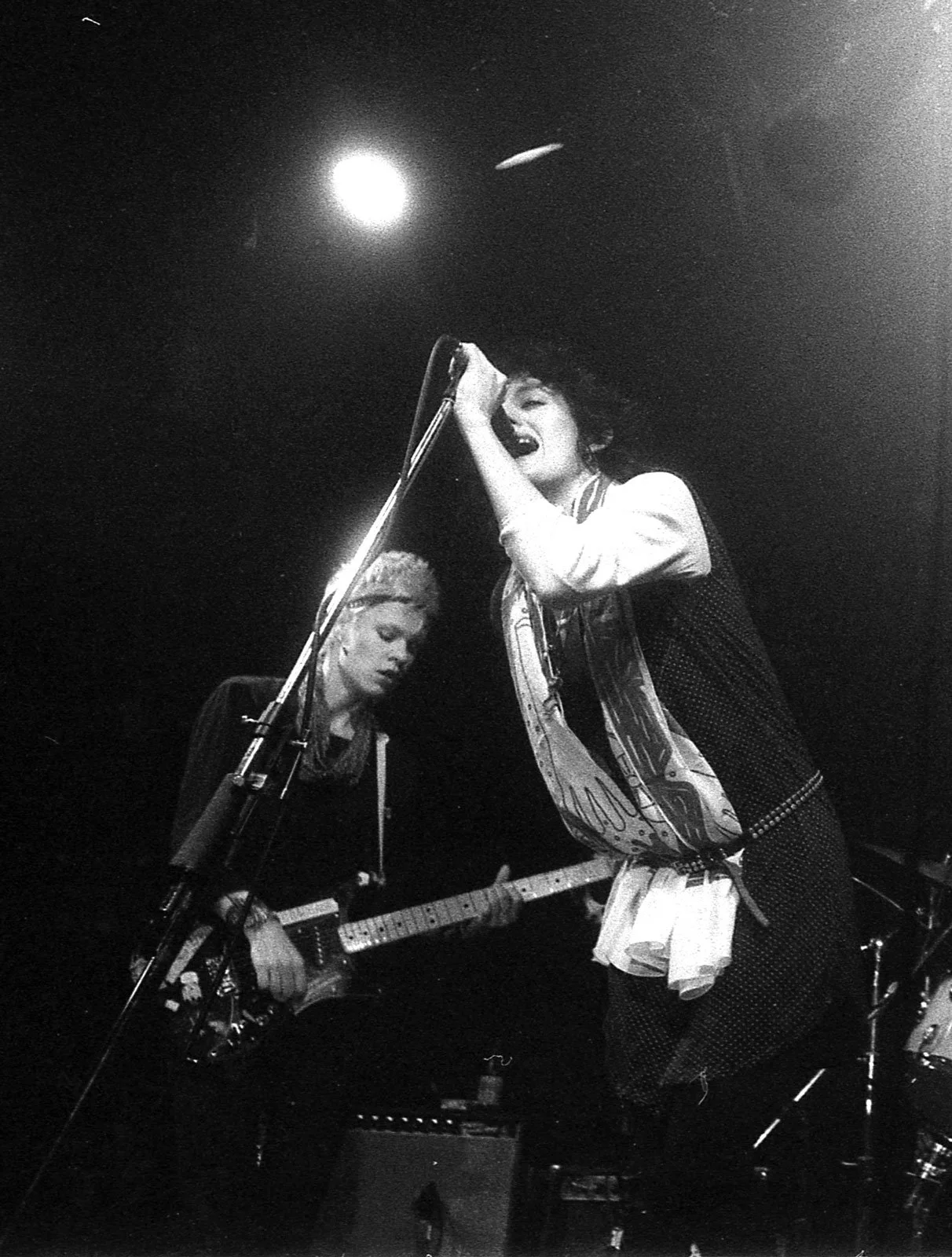
“We were fierce, fearless, goofy badasses! We were fighting against the norm, and I hope that inspires young women to do the same.”
KP: You have continued creating and performing across decades, adapting through enormous cultural changes. What has allowed you to remain creatively curious?
CS: I try to go to see as many bands as I can live and listen to radio shows on NTS. I listen to WFUV with Delphine Blue, WFMU. My son Austin performs in a lot of DIY venues and turns me on to all kinds of cool music that I wouldn't normally even hear about. That helps me want to create new songs.
I just finished an album with Knox Chandler. The project is called the Forty Elephants, and it will be coming out on Wharfcat Records in January. It sounds very different from Bush Tetras, kind of in a genre all by itself. Lotte Lenya meets Alice Coltrane.
KP: Oh, how cool! I can’t wait to hear.
In 2021, Bush Tetras were celebrated with the release of a career-spanning box set, marking decades of influence on generations of musicians. What did that moment of recognition mean to you after so many years of creating outside the mainstream?
CS: It felt good to finally put it all together, and I’m so glad that Dee was alive to see the final product. Because we lasted decades — with on-and-off periods between — our styles developed from outside influences and life experience. It’s interesting to hear the changes and still hear the Bush Tetras sound and chemistry.
KP: I’m so happy that was the case as well. And speaking of Dee, just before the release of the box set, he passed away at the age of 65. How did losing him change the way that you thought about Bush Tetras’ history and future?
CS: It made it all so bittersweet. We worked so hard to organize the box set, and we had to do it during the difficult time of COVID. It turned into the end of an era, having him pass the night before the record release celebration. A memorial and a celebration.
KP: Certainly so.
And after his passing, you continued the band’s journey by bringing in Cait O’Riordan of The Pogues and Steve Shelley of Sonic Youth, who also produced They Live in My Head, your first album in more than a decade. The record was created in part as a tribute to Dee’s memory. How did grief and love influence the writing and recording process?
CS: Well, we had started a few of the songs with Dee, but he was slipping away at the end there — Pat and I could see that we couldn’t make any real progress with them. It was COVID, and difficult to write together as it was. Steve joined us right after Dee passed. R.B. Korbet — who was a friend of Dee’s — and Steve helped us write most of the other songs on the album. I think that was cathartic for Pat and me to dig in and make an album. One of the songs, “Ghosts of People,” had gone through many changes — only the words stayed the same — since 2008! It felt so amazing to finish that one, as the words mean a great deal to me. Cait was able to join us to tour and promote the album. She was the perfect fit and is such a fun spirit onstage. It gave new life to our war-weary troupe.
KP: Did creating new music later in life change your relationship with the band or with yourself as an artist?
CS: Seeing that it’s only Pat and I left of the original band, I can say that our relationship hasn’t changed. We love each other and really have so much chemistry together musically. It’s such a stroke of luck — I never take it for granted. I think my love of writing and recording has deepened. It’s kind of magical. TLIMH is something that I’m really proud of and reflects growth and maturity for both Pat and me.
KP: You have witnessed multiple generations of New York artists and cultural movements. What changes have surprised you the most?
CS:I never could have anticipated the extent of the influence of social media, technology, and this new right-wing takeover, although I probably should have! I think that there is a backlash movement starting with bands who do not want to sound slick, use autotune, or lose the organic sound of the instruments. I’m hopeful. Anyone can sit in a room at home and make sounds, but the joy of collaborating in some dingy basement will never die.
KP: When young women discover Bush Tetras today, what do you hope they take away from your story?
CS: We were fierce, fearless, goofy badasses! We were fighting against the norm, and I hope that inspires young women to do the same.
KP: What is something you wish you could tell your younger self?
CS: Appreciate the small things. Appreciate the chemistry and the gift of creating. Chill out more. Focus more. Life is short.
KP: What advice would you lend to women on life, work, or love?
CS: I’m not one for advice because I’ve noticed that most people don’t listen, myself included. I think young women are totally ruling these days compared to when I was twenty. They have more agency, more opportunities. Although we do have a ways to go, we're on the right path. We did have lots of chutzpah and courage, so, if anything, I’d say to embrace those qualities whenever possible.
KP: What do you feel makes a provocative woman?
CS: Chutzpah and courage, of course!
Photography (in order of appearance): Bran Randall, Bob Krasner, GODLIS