Bif Naked on Survival, Joy, and Radical Honesty
Few artists have embodied resilience as completely as Bif Naked. Across more than three decades, the Canadian punk icon has built a career defined not simply by longevity, but by an unwavering commitment to radical honesty. Whether confronting addiction, abuse, illness, or the countless reinventions demanded by survival, her work has consistently transformed personal hardship into collective catharsis, forging a body of music that is as emotionally vulnerable as it is defiantly uncompromising.
Born in India and adopted by American missionaries before being raised in Canada, Bif emerged in the 1990s as one of alternative rock's most singular voices. Blending punk ferocity with melodic immediacy and deeply autobiographical songwriting, she carved out a space that challenged conventional ideas of femininity within rock while refusing to sacrifice authenticity for commercial expectation. Albums including Bif Naked, I Bificus, and Purge established her as a defining figure in Canadian alternative music, while songs such as "Moment of Weakness" became enduring anthems of vulnerability, resilience, and self-determination.
Yet her legacy extends well beyond music. A bestselling memoirist, documentary subject, outspoken advocate, and longtime hospice volunteer, Bif has spent decades proving that survival is not merely about endurance, but about service. Following her breast cancer diagnosis in 2007, she transformed her own experience into one of mentorship, dedicating herself to supporting patients and families navigating illness while continuing to perform, write, and create with undiminished conviction.
For Bif Naked, punk has never simply been a genre — it is a philosophy of radical honesty, compassion, and unflinching personal freedom.
KP: There are few people I've spoken with for Noir where the first word that comes to mind when I think of them is “survivor,” and you're obviously one of them. I want to dive deeper into that word — which you rightfully have tattooed on you. But before we get that far into your life, I want to start at the very beginning.
You were born in India to a teenage Canadian mother and a British father. Rejected by both families, you spent your earliest years hidden away in a mental hospital before being adopted by American missionaries following years of legal battles. Raised in Canada, you endured abuse, addiction, violence, and exploitation throughout your childhood and adolescence before finding refuge in the punk scene, where music became both an escape and a lifeline. By the age of 21, you had survived more than most people experience in an entire lifetime.
When you look back at those early chapters of your life now, how do you think they fundamentally shaped both the person and the artist that you would become?
BN: I think, for a lot of artists — myself included — we're emotional people, and we don't have boundaries. I think that lends itself to being an artist in so many great ways.
It's easy now for people to throw around the word “trauma,” which I actually think is a great word because we didn't have the language for it growing up — we didn't have language for our shitty stories or our lousy experiences. We really didn't have a way to frame it. All we knew to do was either to paint it, illustrate it, write it down, pluck guitar strings, or do something with our feelings because we couldn't just sit with them.
We didn't really have therapists. We didn't have medication. A lot of people had drugs or alcohol, but we didn't really have outlets other than creating things.
So I think when we survived things, that simply meant that we didn't kill ourselves like some of our friends did, or we didn't succumb to drugs and drinking the way that a lot of our peers did. A lot of us dipped our toes in and got out of the pool, or we simply kept creating. I think we were all the same. Some of us survived, and some of us didn't.
KP: That’s very true. It's interesting because the way people deal with trauma now is so generationally different, and I don't think we think about that often enough. Maybe a blend of both approaches is best. Perhaps things today can be over-therapized to a certain extent as well. It's fascinating to think about how that changes from generation to generation.
BN: It definitely is.
KP: Your music blended punk aggression with pop hooks before that became common within the mainstream alternative scene. I recently spoke to Fefe Dobson, who came after you.
BN: Oh, did you?!
KP: Yeah, she's so sweet! She spoke a lot about feeling misunderstood and struggling to find her place within both worlds, even after your presence had already been so groundbreaking — I can only imagine what you experienced before that.
Did you also feel misunderstood creatively during those early years? What kept you pushing through while staying authentic to yourself?
BN: I always felt really lucky just to have a seat at the table as a chick. There weren't many girls on the bills overseas when we were doing it, at least not that I knew of.
We'd play with bands like The Prodigy, and there was Skunk Anansie on some of the UK bills. On some of those early tours we'd go out with bands like Alter Bridge or Life of Agony, and I just didn't see many other women on the lineup.
I felt super self-conscious. I didn't want to be misunderstood. There were a lot of American women in the music business at the time, but they were pop stars — Christina Aguilera, Britney Spears, or Gwen Stefani. Gwen and I are the same age, but she was a California girl — No Doubt was doing ska, and then they became huge because they had a major label. She had this Marilyn Monroe look going on, so musically and visually it was completely different.
We didn't really want to play with the ska bands; we wanted to play with the hardcore bands. We'd get booked on Roadrunner tours, and then I'd play songs like "Daddy's Getting Married" while Austrian guys threw beer steins at my head. I'd think, This is going to suck, but I'm going to do it anyway. Buthonestly, it was great fun, and I didn't care.
I think what was different for me is that I never took it personally. A lot of female artists did take it personally. The Riot Grrrl movement came along, and they were really, really angry. They hated the patriarchy.
But the guys in my band were — and still are — the sweetest guys that I've ever met. I couldn't be mad at them. I love so many men. So I never took it personally when the bigger systems — the white men running the record business or the promoters — created obstacles. I just thought, I'm going to keep doing my show.
I also knew that I wasn't going to drink. Not because I thought I'd wake up married or in jail, but because I'd lose my voice. I'd talk too much, lose sleep, and I wanted to keep my wits about me. I needed to be able to do 200 shows in a row. Straight edge ended up being a really good fit for me, and I think it earned me a little more respect than some of the other bands.
I was also very deliberate about making sure everyone knew that I would never sleep with the headliner. That was important to me. I'd see younger girl bands doing that, and while I wasn't going to judge them, I'd think, Please understand that you're setting everybody back if you do that.
I always felt like I had to represent women well. I couldn't behave in a way that would betray all of us. So there were a lot of very intentional decisions.
KP: Well, it worked out!
BN: Exactly. If I did shibari in the middle of my show, it was because I wanted to — not because I was hammered. [Laughs]
KP: [Laughs] That’s how it should be!
And speaking of punk, you were incredibly influential and transformative within the alternative scenes across Canada and beyond. Looking back at your third record, I Bificus, how do you think it changed the perception of women within Canadian punk and alternative music?
I’m American — I was born and raised in New York — and from my perspective it feels like there was a clear before-and-after moment around that record. Do you feel that way about it? How does it feel to you looking back?
BN: I don’t know! It’s funny because I always loved songwriting — I was such a huge Patsy Cline fan. I was never really a singer — I never wanted to be a singer — but I loved performing.
When we wrote “Moment of Weakness,” it was a ballad. A total ballad. Then Glenn Rosenstein — who, by the way, went to high school with Andrew Dice Clay and produced that record — turned it into this do-do-do-do-do-do song. I remember thinking, What are you doing to this song? It was so different from how it had been written.
I was really unsure. I kept saying, “Are you sure people are going to like this?” It’s supposed to be such a sad song. It was a breakup song. It was about heartbreak. I kept saying, “I don’t know if people are going to like it.” And he said, “You’ve got to trust me. They’re going to love it.”
Then it became the song that people wanted to hear all the time. So yes, it absolutely changed the game. It was such a huge song for me.
And I got to wear what I wanted, which was snowboarding pants. The stylist came to the video shoot with all these tight PVC outfits, and at that point in my life I was such a snowboarder and skateboarder. I said, “I’m not wearing those. You’re not making me dress like that.” They said, “Okay then, wear whatever you want.”
So I wore these ugly yellow snowboarding pants. [Laughs] Looking back, I’m like, Oh my God, I can’t believe I wore that. But it was so authentically who I was at the time. I look back now and think, If I were that kid’s manager, I would have kicked my ass. But Peter, my manager, always allowed me to be exactly who I was, which was incredible.
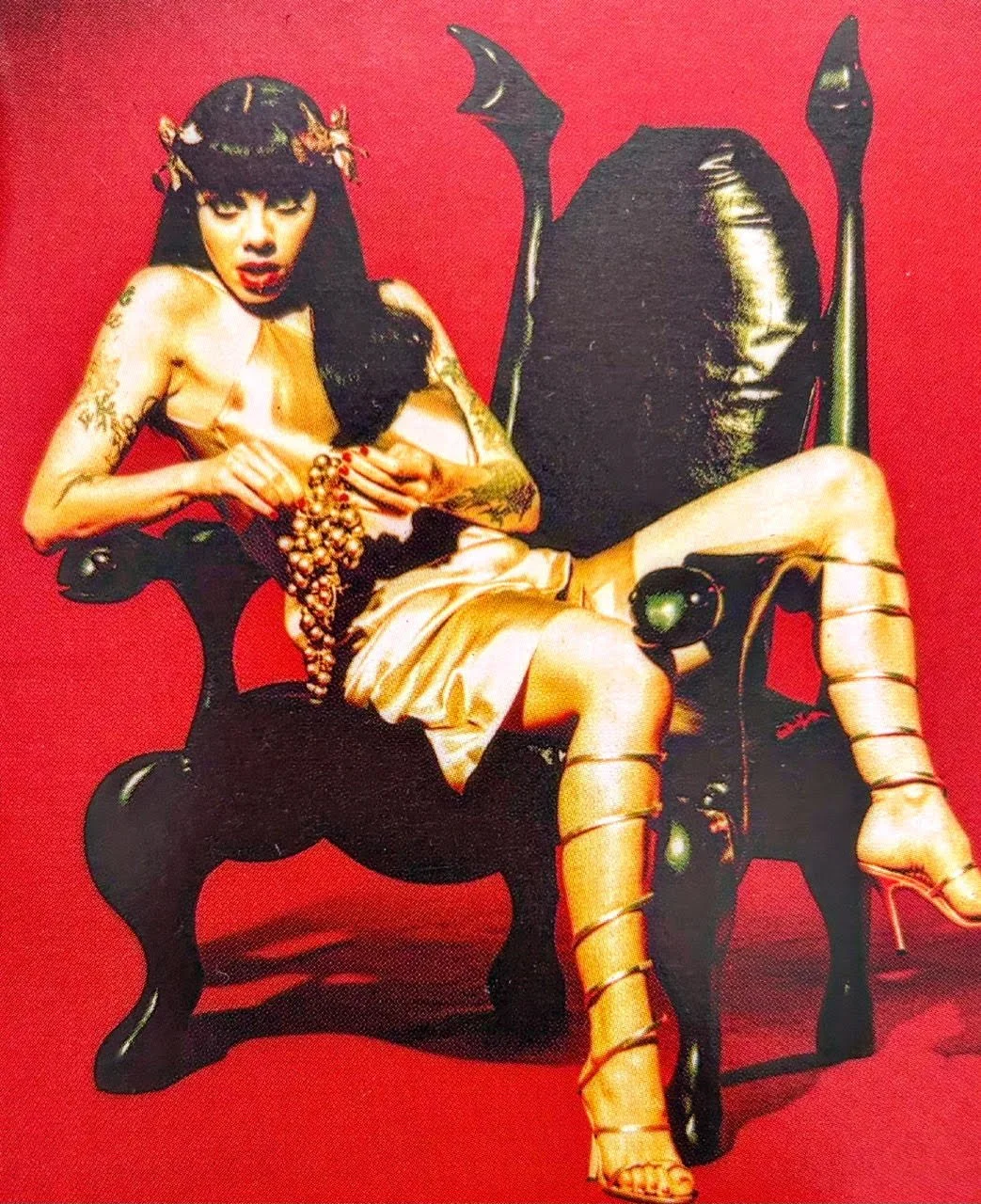
“I think that all of the shitty decisions we've made in our past don't have to define us. We don't have to carry that story with us forever. We get to rewrite our narrative.”
KP: That’s a gift. A lot of people aren’t so lucky.
What’s amazing is that your progression transcended music — it bled into your songwriting, but also into who you were as a person. Back in the ’90s, you were also writing songs about women, which was incredible.
I was born in 1993, and I got a lot of shit for being gay in grammar school. It got a little easier in high school, and then I went to Parsons in Manhattan where, suddenly, everybody was gay. [Laughs]
Did you realize at the time how significant that visibility would become? Because I was so young in the ’90s, I’m curious whether — as an adult then — you felt that you were planting a flag in culture and becoming representative for a lot of people.
BN: I really didn’t. I think it probably started with the song “Everything.”
To me, the important thing was that I wanted it to be a song for everybody. At the time, we kind of thought we were all just a bunch of little bisexual kids, but really we just loved everybody. I kept thinking, Why can’t my song reflect that? Why can’t it be about loving whoever we want to love?
Yes, the song was about a girl, but I wanted everyone to be able to sing it. That was my goal. And the label didn’t stop me — partly because it was my label, and we could do whatever we wanted.
Everyone said, “Yeah, it makes total sense that you’re singing this song for this hot redhead.” Even songs like “My Bike” — which was also about a girl — carried that same honesty. It just wove itself through my songwriting naturally. “The Letter” is the same way. From my first record onward, that’s just how it was, because that’s who I am.
It honestly never occurred to me that it was unusual until much later, when songs like “I Kissed a Girl” became famous and people treated them as groundbreaking. I remember thinking, Okay, whatever. [Laughs] I’ve always believed that there’s room for everybody to discover themselves, and the more visibility, the better.
KP: Definitely. You were well ahead of your time.
To move onto something more skin deep, I've always loved your look. There's nothing I love more than a kick-ass, strong woman.
During the height of MuchMusic culture, music videos were such an important part of an artist's mythology. How conscious were you of building the Bif Naked persona visually?
But perhaps first, let’s start here: do you view Bif as a persona? So many artists tell me that there's no separation between themselves and their art, while others say that there is. Visually and personally, is Beth different from Bif? Do you separate yourself from your art at all?
BN: Even since the early days, I've always worn T-shirts with slogans on them. I've always believed that even if someone can only see you from far away, if they can see your shirt with a pink triangle on it, that's important — even if they never talk to you. Or if they see your shirt with "Land Back" on it, that's important too.
I believe in things that carry messages because they do send a message, and that's who I am in general.
Sure, if I could be Tina Turner until the end of time, I'd love to be on stage in a miniskirt and heels until I'm 80, just like she was! But during the day I look like a soccer mom because I'm at the dog park like everyone else. [Laughs]
I always joke with Peter, my manager. I tell him, “I think I'm getting so old that I have to stop dyeing my hair black.” [Laughs] Even though Liz Taylor dyed her hair black until she was an old lady, I don't know if I want to keep doing it forever. I don't know what I'm going to do! Am I going to have pin curls? I think I'm just going to go out like Elvira. [Laughs]
KP: [Laughs] I think about that too. I'm a fellow hair dyer. What do we do as we age? I've been dyeing my hair black since I was 18. I was naturally blonde when I was little, and I ask myself all the time, Am I really going to do this for the rest of my life? I hate it. I'm so lazy — I'm lazy as fuck!
BN: Maybe just shave it!
KP: I already shaved the sides because I figured, Less hair, right? I'm so lazy that I don't even do the back anymore — now I just buzz my sides.
BN: If only we could keep this hair color forever…
KP: I know! It’s too exhausting to think about. [Laughs]
The punk scene once thrived on confrontation and discomfort, and you've described punk itself as a form of "radical honesty." I feel like that's changed so much. My uncle was a drummer—he played with the Ramones back at CBGB.
BN: That’s so cool.
KP: It is. The scene has always been a big part of my life.
But in a world driven by popularity-based algorithms and disingenuous social media, do you feel that the genre has become too self-aware to feel as dangerous? How do you think it's changed across generations?
“I wish that I could do chemotherapy for patients who are too scared to go through it because, honestly, us old punks will do anything.
We don’t care. Nothing can hurt us. We’ve done it all. We drank the poison. We stage dived and landed on our elbows. We cut ourselves on broken glass on stage. We’ve survived it all.
At this age, we’re kind of invincible. We’re tough. Now I’m in my fifties, and I really feel like the sky’s the limit.”
BN: I think that punk will never die. I really do.
And where you are — I still believe — is the epicenter of punk. I really do. I still think that Vinnie Stigma and all the New York OG punks are the shit. I still follow all those guys — Ray Cappo, everyone from Shelter. They were my heroes, when Shelter was in their heyday. All the Krishnacore guys — I loved them.
Listen, John Joseph is an author now, but when you talk about the Cro-Mags and those early days of punk rock, or Bad Brains — we saw Bad Brains at CBGB. We came down and saw John sing with them. I think it was around 2006, when CBGBs was still open.
KP: So fucking cool.
BN: All that stuff... Agnostic Front, all those guys… I can't help but still smile talking about it.
Now everyone's getting older, but I still find myself constantly inspired by them. Even here in Canada, bands like D.O.A. — every time I hear “The Prisoner,” I turn into a 14-year-old girl again. I crank it in my car and scream every word at the top of my lungs.
SNFU is another one. I sang on two of their records, and honestly, I don't care if people talk about me being on The Tonight Show, but I love the fact that I got to sing on SNFU records. Those are the milestones in my life that really matter to me.
But back to what you asked — I truly believe that punk will never die. There are always new young bands coming through. People are constantly discovering hardcore, and I believe it will continue to inspire young people. It'll keep motivating them to take charge — not only of their own lives, but of their sociopolitical lives, especially today.
It's necessary. We need to organize, find community, and build something together. That's what punk was about in the beginning. It gave people a sense of community.
It's like that saying: Stay weird.
KP: May it never die.
Both your autobiography and your documentary were deeply unfiltered and emotionally fearless in a way that very few memoirs or documentaries are. Did writing prose force you to confront your past differently than songwriting ever had? Was there anything about that process that revealed something new to you?
BN: Oh, 100%.
With lyrics, poetry, and songwriting throughout my youth, I was able to be autobiographical, of course, and that was very cathartic throughout my early twenties. I could enshroud all of those painful, traumatic stories in the poetry of couplets and in abstract storytelling.
When it came time to write the memoir, though, that was a different animal. It took a long time because, in telling those stories, I could sit there with my chest puffed out and all my bravado, thinking, I've already told these stories. It's not going to be a big deal. My fans know these stories. This is going to be easy to write.
But even though I feel my memoir was actually very polite, truthfully, and I retold stories people already knew, I didn't go into detail about my stalkers. I didn't go into detail about gang rapes. I didn't go into detail about all the criminals I knew, incarcerations, correctional facilities, or anything like that.
I was working with HarperCollins, so they had the final say. I was working with editors and legal teams, and at the end of the day it was a commercial release. That's fine — I respect that, and I was grateful to work with them.
Then, when we made the documentary, that was different too. Those interviews were another experience altogether. Again, you can't put everything in because otherwise you'd end up with a six-hour film.
Whenever we do Q&As after screenings of the documentary, I get asked all the time about the sexual assault that I describe in the film. I always have to tell the audience that it was not the worst thing that ever happened to me, and it also wasn't the first.
People have so many questions, and they often become very emotional because they want you to punish the perpetrators. They want to project their own ideology onto you. They want vigilantism. Vigilantism is alive and well in this world. People love it. They love telling you what to do.
I always have to remind people that they'll say, "My body, my choice," but then they want to tell survivors — I'll use air quotes there — about how they're supposed to behave throughout every part of their journey, including their survivorship.
It's like, No. You don't get to tell me how I walk through the world.
People don't always like hearing that, which I actually find kind of funny.
I always say that perpetrators are lucky I didn't go into law enforcement. I don't believe in vigilantism, and I don't support it, but I also don't require much sleep. I don't even like sleeping.
Man, if I'd been a cop, I never would have slept. I'd wake up every day absolutely giddy, thinking, Let's go get them. I'd love it.
KP: I totally relate to that.
I started my career in publishing when I was 14. My life has been pretty crazy, but if I could do it all over again — if things hadn't happened the unusual way that they did — I would have wanted to be a detective. Or a hacker — an ethical hacker. Those were my two dream jobs.
BN: Those are both amazing. You're still young!
KP: Well, I feel like I've lived many different lives, even though I'm only 32 now — but when COVID hit, I was about 26. I felt like I'd already accomplished a lot of what I wanted to accomplish, and I thought, I've always wanted to be a detective since I was a kid. Maybe that's something I could actually do.
Then I found out that, at least in New York, you have to spend two to four years on street patrol first, and I thought, Hell no... I just want to go straight into Special Victims or something. I don't really want to go through the whole system. So I thought, Damn it. Maybe next lifetime.
BN: It might be different today? Things change all the time! You should look into it because people like you are needed.
KP: That's a good idea. Well, listen — I sleep three hours a night, just like you, so I think we'd be great! [Laughs]
BN: Exactly! [Laughs]
KP: To go back to the documentary — if there's one thing people could take away from your life story, what would you want it to be?
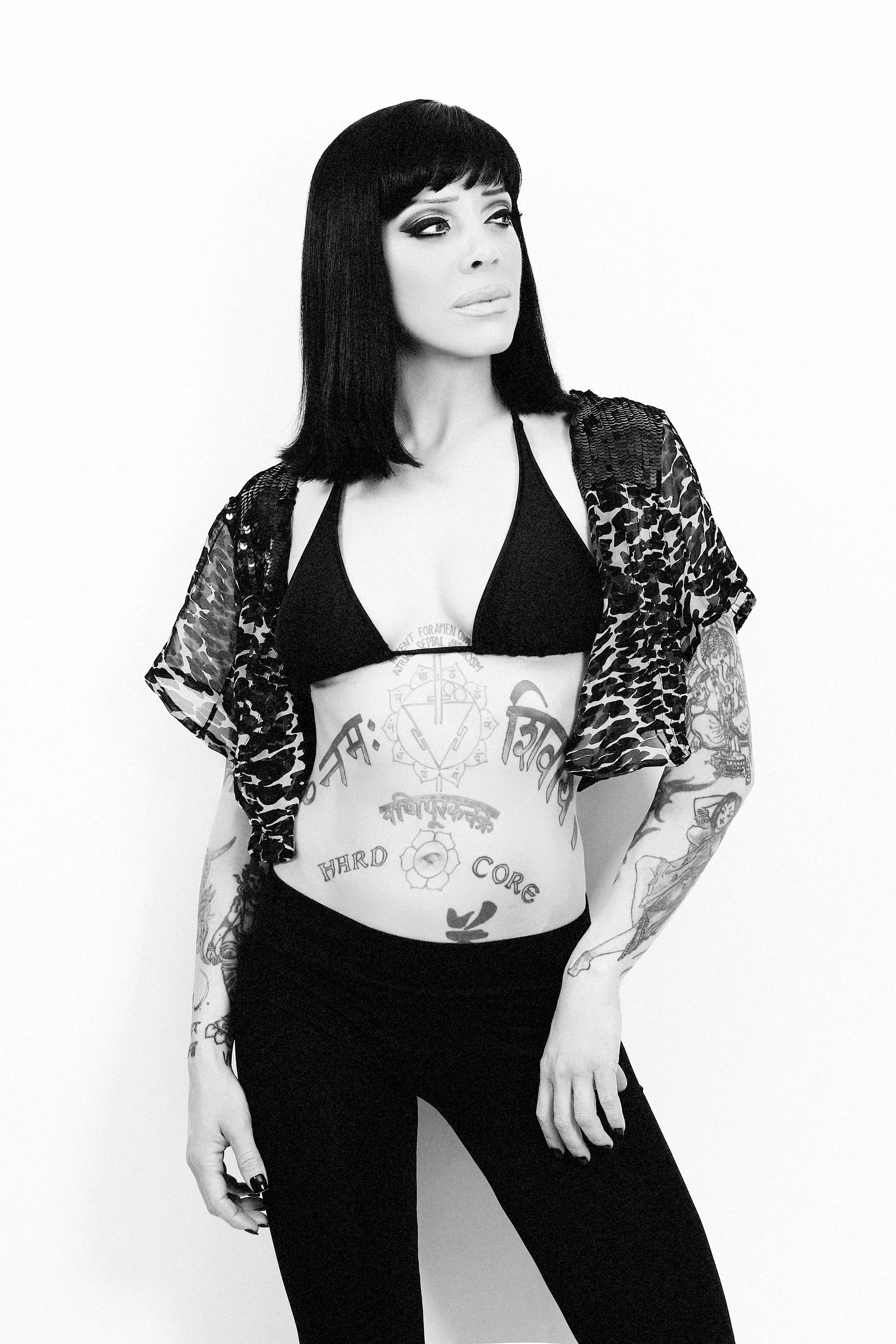
BN: Truthfully, I think one thing none of us do enough is to live in joy.
That has nothing to do with spirituality, religion, or anything like that. I just think we move through life blindly because people are busy, and because life is hard for most people. It gets harder all the time. It's hard being a person in this world. It just is.
No matter what your circumstances are, it's all relative.
I never used to believe that, and I still tend to see two groups of people: there are the richies, and then there's the rest of us. I'll probably never stop seeing it that way. Richies don't really understand the rest of us — not because it's their fault, but because they don't have that frame of reference. They'll never know what it's like not to be rich, and there's a whole sliding scale of wealth that most people just can't imagine living without.
But the truth is that every average person — every nonna sitting alone in her apartment after her children have grown and forgotten about her, every Pilates instructor in their matching outfits, every schoolteacher, every old punk eating out of a garbage can — everyone deserves to live in joy every single day.
Life isn't as short as people like to say. Sometimes it's long. Really long. And it's fucking grueling.
We have a choice every day. You might as well try to find some small snippet of joy — embrace everything.
KP: I love that. I agree.
Whenever people say, "Life is short," I never relate to it. I feel like I've already lived 300 years, and I hope I live 3,000 more.
BN: That's right. Life feels long. Really long. You just have to keep going. Some days you need to reach up and grab somebody's hand. Other days, you have to be the hand reaching down into the well to pull someone else up.
KP: And on the topic of long lives and all of their twists and turns, you were diagnosed with breast cancer in 2007 at the age of 36, after which you had a lumpectomy and underwent treatment.
I've had a lumpectomy too. I have a nasty scar and also had terrible nerve pain afterwards for so many years. I'd get these lightning-bolt shocks that would shoot up my shoulder and down my arm.
BN: Yep!
KP: Thankfully, I didn't require any further treatment, but I know that you did, so I can't imagine what you went through. You're tough. You're very tough.
It made me think a lot about chronic illness because I was diagnosed with Lyme disease in 2018.
BN: Wow. My goddaughter has Lyme disease.
KP: Wow, I’m so sorry to hear that. I hope she’s alright! I was incredibly sick for years. Doctors kept telling me that it was all in my head.
BN: Yeah.
KP: It was very hard to diagnose, but eventually I finally got that diagnosis.
As I mentioned earlier, I started my career when I was 14 years old, back in 2008. By the time 2018 came around, I was already ten years into my career, and then I lost everything for ten years. I was pretty much bedridden from 2015 to 2025 because of what I was going through.
Illness makes you process things. It really makes you think.
I went from a life filled with shoots, parties, meetings, and constant movement to total silence — for ten years, by myself. I think experiences like that make you realize both how unimportant so many things are and, at the same time, how important the things you once overlooked really are.
For me, it was a huge ego death, and one that I welcomed wholeheartedly. I'm actually very grateful for my illness because I think it made me a much kinder, more compassionate person. I'm happy that I'll be returning to public life again soon with this new set of skills it's given me. I'm genuinely grateful for it.
As someone who also went through a major health struggle, I wondered what that battle meant to you. How do you feel it shaped both your personality and your artistry from that point forward?
BN: For me, it brought me into volunteering.
Had I not been a patient, I never would have been in those rooms. Going through chemotherapy and radiation put me in cancer hospitals, and I just kept getting asked to meet with other patients.
Of course, I'm the girl with no boundaries, so I couldn't say no. But what I discovered was that I loved it. I developed such a passion for meeting other patients, doing peer-to-peer volunteering, and chaperoning people to their chemotherapy appointments.
A lot of patients were terrified of chemo, but I had already lost my hair. I was already bald. I already had neuropathy in my hands and feet, so I could speak from experience. People would ask me about it, and I'd say, "Here, touch my fingers. Feel this, because I can't feel it!” We'd laugh about it.
I'd already had jaundice. I already had a port and a catheter in my jugular vein. I'd already experienced all of these things, so I could tell people what to expect.
I loved being able to mentor them and guide them through that experience.
I never stopped volunteering, and I never would have discovered that about myself had I not been a patient. I really felt like I'd found my calling.
I also felt that being a performer — being on stage, doing autograph lines, and meeting fans all those years — had prepared me for it. I was so grateful for all of that lived experience because it allowed me to connect with people in a meaningful way.
I still do it today, and I love meeting the families of patients too.
Eventually, I started getting asked to do hospice visits for patients who weren't going to recover. A lot of people weren't comfortable saying yes to those visits. They felt awkward, or they didn't know what to say or do. But because no one else was saying yes, I felt compelled to.
“Life isn’t as short as people like to say. Sometimes it’s long. Really long. And it’s fucking grueling.
We have a choice every day. You might as well try to find some small snippet of joy — embrace everything.”
What I discovered was that I loved being in that setting too. That's how I became a hospice volunteer.
My little dog, Grace — who really was home to me — had such a calm, gentle nature, completely different from the other dogs that I'd had. She started coming with me to hospice visits, and I quickly realized that she was a natural therapy dog.
The two of us would go together, and I just thought, What a blessing. She was built for that work. I truly feel that it was meant to be.
I wish that I could do chemotherapy for patients who are too scared to go through it because, honestly, us old punks will do anything.
We don't care. Nothing can hurt us. We've done it all. We drank the poison. We stage dived and landed on our elbows. We cut ourselves on broken glass on stage. We've survived it all.
At this age, we're kind of invincible. We're tough. Now I'm in my fifties, and I really feel like the sky's the limit.
I still love performing. Every summer we do festival shows across Canada. We've got some big shows coming up with The Tea Party. They're not a punk band, but they draw huge audiences up here.
What's funny is that all my little punk fans come to those shows too, which I absolutely love. Then, whenever I'm in those towns, I go and visit the hospices while I'm there.
For me, it's the perfect life.
KP: That's incredible. The work that you do is truly amazing. You should be so proud — I mean that.
BN: Thank you.
KP: You've also been very open about addiction, self-destruction, and the coping mechanisms that can emerge from trauma. So many women quietly struggle with those same battles behind closed doors.
For the women who see themselves in parts of your story and feel trapped in cycles of substance abuse, shame, or simply survival, what would you want them to hear from you today?
BN: You can recover.
So much of our recovery, our ability to succeed, and our ability to transcend our circumstances is mired in — and entangled with — our sense of self-worth.
I think that all of the shitty decisions we've made in our past don't have to define us. We don't have to carry that story with us forever. We get to rewrite our narrative.
The shame we carry from our past doesn't have to keep coming with us. That's the thing we get to switch off. As we get older, we get to change the story. We don't have to keep repeating the same narrative over and over again.
Change the story. Change the channel.
That's what's going to free us. That's what's going to allow us to transcend our circumstances. You are worth it — you are not your past.
Just like I wasn't my past, you get to walk away from it. You get to shed it. You get to walk free of it.
KP: That is incredible advice. I certainly agree.
Earlier we were talking about not only your image, but also your personality. You're one of those people that I immediately think of as having a very tough exterior but an incredibly soft interior — someone who's lived, understands, and has developed such deep compassion. Even hearing you speak earlier about your volunteer work, it's incredible.
People have often said the same thing to me. Someone who had followed my work for years finally met me for the first time and said, "You're absolutely everything — and nothing — like I thought you'd be." I actually think that's one of the best compliments that you can receive.
I think you're very much the same.
I've thought a lot about this in my own life — how going through difficult experiences creates a sense of duality within you.
Your work has always balanced aggression with softness, glamour with pain, and beauty with destruction. Why do you think those opposites — both in your art and in your personality — have always coexisted so naturally?
BN: I think art is often about juxtaposition, like you said.
Joy and pain are always together.
For some of us, I think that duality is just something that we're naturally drawn to. Fire and ice.
Rain washes away the shame. It washes away the tears. Mix it all into the rain. Oil and water don't mix, but if there's enough rain, eventually it washes the pain away.
Art imitates life, and I think that's ultimately what we're all trying to do — at least a little bit.
It's healing. It really is. It's healing, it's freeing, and it feels good.
As artists, we're compelled to keep doing it. Maybe it even wards off insanity because we're doing the same thing over and over again, but it feels right. It's a good fit for us.
If it were for everybody, everybody would be doing it. But it's not.
KP: On a more skin-deep note, my girlfriend is an incredible tattoo artist — truly one of the best. She works at Bang Bang here in New York.
I was always more of a piercings girl, but through her, I've developed such an appreciation for tattooing and also learned so much.
So, stereotypical question, but I can't help asking because I love your pieces! Do you have one tattoo that means the most to you? And what was the very first one you ever got?
BN: Obviously my "survivor" tattoo means a great deal to me. I got it so long ago — probably 30 years ago now.
My very first tattoo was about 40 years ago when I was still a teenager. It was the Eye of Horus — the Egyptian all-seeing eye. Most people are familiar with it. I got it on my arm, and honestly I only wanted one tattoo.
Like everybody else, though, I always have ideas for more.
I probably have 80 or 90 tattoos now. Actually, I don't even know how many I have anymore.
I have the entire Taj Mahal tattooed across my back. It's done in a pointillist style that was inspired by Russian prison tattoos, which I've always been fascinated by. But because of my Indian heritage, I wanted the Taj Mahal instead.
Now I'm obsessed with tattooing my dog. I want her face everywhere. I always joke that I want her face on my neck, on my heart. I joke that I want "Don't fucking touch me" tattooed across my pussy. [Laughs] I want hand tattoos. I want knuckle tattoos. I'll probably never get any of them.
I always talk about getting giant spiders, stars on my kneecaps — I have a million ideas that I'll probably never follow through on because I'm lazy and I never have time.
But I love tattoos. I really do.
KP: You should go for it.
What would you tell your younger self?
BN: Don't worry.
KP: What advice would you give women about life, work, or love?
BN: Calm down.
I think we all get so wound up. It's in our nature to overthink everything because we're meticulous and because we care. We want everything to be perfect. We want everything to work out.
I think that women just need to stay calm.
KP: What do you feel makes a provocative woman?
BN: Her imagination.
Photography (in order of appearance): Coco and Kensington, courtesy of Bif Naked, Coco and Kensington