Daisy the Great on Creative Freedom, Female Friendship, and Finding Magic in New York
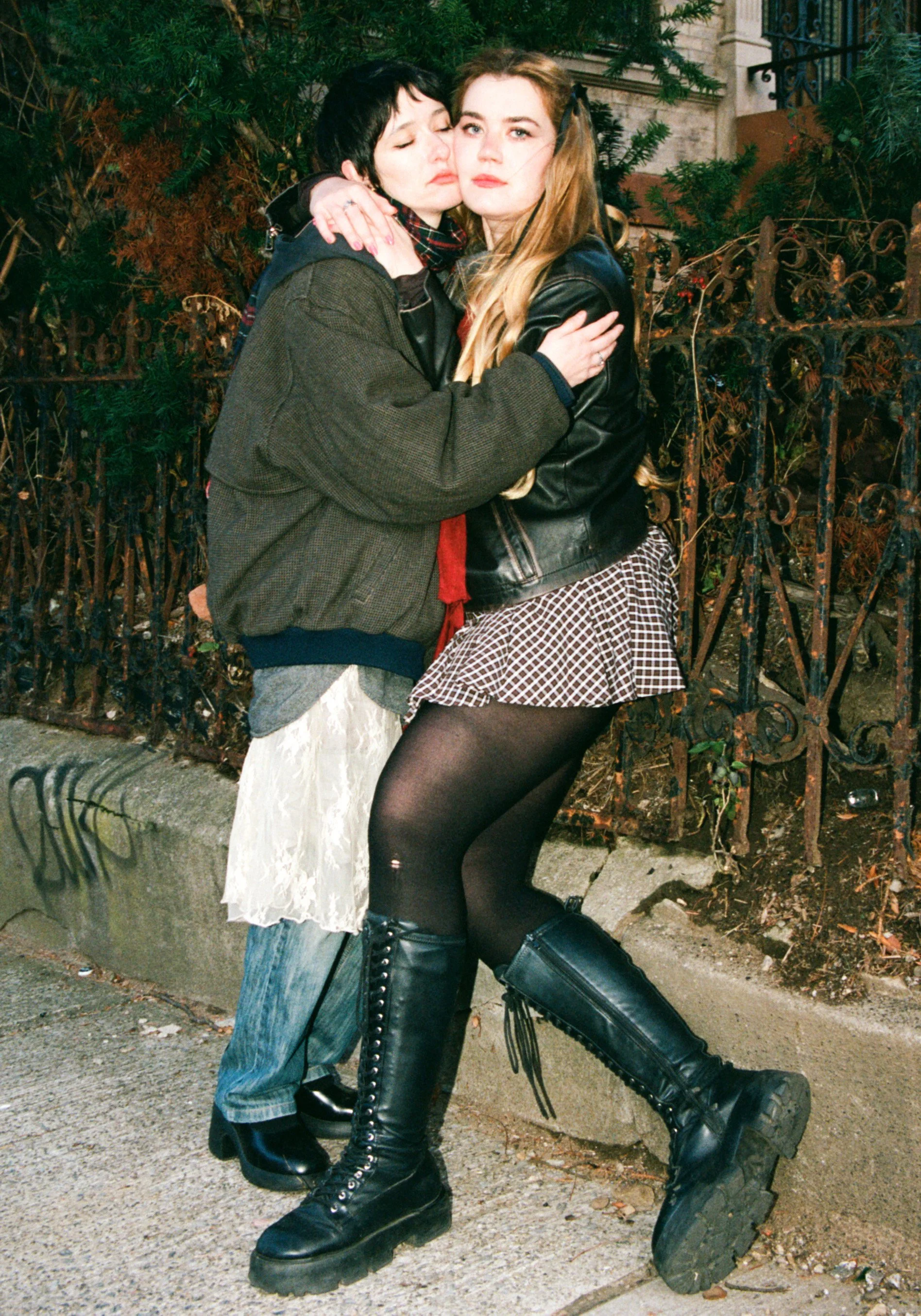
Long before Daisy the Great became a touring band, Kelley Nicole Dugan and Mina Walker were already mastering how to build their own worlds together.
The pair met while studying acting at NYU’s Tisch School of the Arts, but found a different kind of creative freedom in making music together. Their theatrical roots never disappeared: storytelling, visual art, performance, and world-building became integral to Daisy the Great, whose layered harmonies and idiosyncratic indie rock have carried the New York band from local stages to a life spent regularly on tour.
Across albums including I’m Not Getting Any Taller and All You Need Is Time, Dugan and Walker have written candidly about growing older, identity, relationships, and the particular uncertainties of finding your place in the world.
Their latest project, The Rubber Teeth Talk With Friends, takes that instinct for exploration somewhere new. Rather than release a traditional deluxe album, Daisy the Great handed its songs to artists that they admire and invited them to reinterpret the material through their own creative lens. Familiar songs reveal different emotions in unfamiliar voices; meanings shift, deepen, and occasionally surprise even the women who wrote them. It’s a fitting evolution for a band built on collaboration — and one that believes releasing a song means allowing it to become part of someone else’s world, too.
It also reflects the larger philosophy behind Daisy the Great: make something, release it into the world, and remain open to what it might become. For a band whose career has been shaped by collaboration, experimentation, and an enduring curiosity about their own work, evolution has always been part of the point.
KP: You met while studying acting at NYU's Tisch School of the Arts before forming Daisy the Great. At what point did songwriting begin to eclipse acting as your primary creative language?
KND: I’ve always been interested in all of it. I grew up singing and writing songs and performing in plays and musicals, and then, yes, we went to school together for acting at Tisch.
Throughout my life different elements have taken the spotlight, but I think of myself as someone who’s involved in the arts in a lot of ways — that feels pretty defining for me. We both do a lot of visual art, too, and I think all of it plays into the way that we create and think about our world-building.
In terms of the Daisy timeline, I’d say up until COVID times I was still acting a lot. I was performing Off-Broadway and playing local New York shows with the band all the time. Then, coming out of lockdown, our music had really started picking up quickly on the internet, and we started to become a regularly touring band.
The love and education we have for theater and acting is still woven into the way that we think and work regardless. We direct and/or edit most of our music videos — Mina does the merch design and cover art, and we place a big emphasis on storytelling in our writing. We’re lucky that we had that training together too because our language with each other is kind of an amalgamation of all of it. There’s a lot that we reference from our acting and theatrical background in addition to the music world we’ve bonded over and built together.
MW: I think I really fell in love with songwriting in the middle of college. I felt very attracted to making music because it felt like I could really build an entire world and make everything happen all on my own if I wanted to.
I was frustrated with acting even though I loved it since a lot of it was in other people’s hands. If I wanted to act in something, I had to audition — I had to be chosen to be a part of someone else’s world.
I loved building worlds on my own and then performing and creating inside of them. I felt so free when I started making music, and when I found Kel as a collaborator, it felt so perfect. We really just had so much fun and kept making music. We just continued to get more and more excited.
KP: And speaking of working together, your harmonies have become one of the band's defining characteristics. How do you think your voices reveal different emotional perspectives within the same song?
“I think friendship is one of the most meaningful experiences of being alive — it’s so complex and beautiful and worthy of so many songs.”
KND: I think the way it happens changes a lot. Our roles shift depending on the song, but we definitely always play with the color of the vocals and love to use the quality of the vocal or the interval of the harmony to reflect a specific emotion or feeling within the lyric.
In “Lemon Seeds,” for example, which is about the potential end of a friendship, we wrote the melody lines and performed it in a way where my chorus feels a little more hopeful and active, and Mina’s feels more solemn and resolved. It feels like you get a sense of both sides of the same coin as you listen to the song. It might represent the two people in the relationship or just two sides of how you feel about it, depending on who you are and how you listen to the song.
KP: All You Need Is Time wrestled with uncertainty, identity, and growing older. Looking back, what does that record represent to you now? Did making that record change your understanding of yourselves?
MW: The songs on that record are so special to me. They represent such a pivotal moment in our lives, when we were really coming into adulthood in New York and when we were first performing as this band.
Our first record, I’m Not Getting Any Taller, contains a lot of the first songs that we wrote together, but this second album contains a lot of the songs that we wrote for the sake of performance. After we wrote the first album, we already started to write new songs as we learned what and how we liked to perform. We decided to write songs that felt really good to sing — with a lot of heart and bigness. We performed those songs for years before we actually recorded them, so that album feels very rooted in our early live performances for me, a time when we were really getting comfortable and finding our onstage presence as a band. “Routine” from that album is still one of my favorite songs we’ve written.
KP: Your latest album, The Rubber Teeth Talk With Friends, is ultimately a record about conversation and reinterpretation. What conversations were you hoping these songs would begin for your listeners?
MW: This album was really about letting songs live and evolve. Recordings, to us, capture a song at one moment in time, and it’s so exciting to hear them through new voices. We learned so much about our music by giving it away to artists that we admire. Our music is very lyric and melody centered, so it’s amazing to see how much meaning can come out of hearing a song in a new way. I hope that listeners can listen to both this album and the original and find a deeper understanding of themselves through the music.
KP: And speaking of that, rather than releasing a traditional deluxe edition, you invited other artists to reinterpret every song. What made that concept more exciting than simply adding new material?
“You don’t need to wait for approval to start something or release something. Don’t worry about doing it right.”
KND: We’ve always been really interested in the way that different performances or versions of songs can reveal different sides to a track. The recording is just one way it could be performed, but every time we play it on tour or with different instrumentation or in a different headspace, the meaning can shift and grow.
Releasing music in general feels like the worlds of the songs can crack open with everyone listening and applying their own stories to the music, making it theirs. This project took it a step further by having literal new versions and interpretations being created. It was such a dream to have these incredible artists take the songs into their hands and make them their own. It also taught us a lot about our own songs to hear them reflected back in this way. It’s so special. We’re so happy with how everything turned out.
KP: You said that each collaborator highlighted "a different side of the meaning" of the songs. Were there any reinterpretations that genuinely surprised you?
MW: Tex Patrello’s version of “Sue Me Alice” really cracked open the song for me. It made me feel much more gentleness and compassion for the storyteller, which made the meaning feel much more vulnerable and lonely. The song is about comparison and longing, and I think this version really highlights the longing.
KP: You describe "Dog" as being about walking around New York on a bad day and finding strange comfort in the city. As a native New Yorker myself, I can relate! Is New York a recurring character in your music? How has New York shaped Daisy the Great creatively?
KND: Totally. I’m from New York City as well and have written most of my songs here, just walking around. New York is the setting for most of the music, even if it’s not explicit. We also met in NYC at school and started the band while playing here, so the energy of the city is really built into the foundation of the band.
New York is a great place to be super creative and freaky and brave and to find magic in yourself and in other people. There’s music and art everywhere — there are always people creating something amazing.
KP: “Ballerina" explores both performance and expectation in a very compelling way. What first sparked the idea for that track?
MW: “Ballerina” was the first song that we wrote for the album. I remember the line, “What’s the point of a body if I’ll never be a ballerina” coming to me, and I thought it was so funny and true. I demoed out a little track with that intro, “I wake up at 4 a.m., I’ll never be a ballerina,” and I showed it to Kel. That song kinda fell out of us after the intro was demoed out. We were so excited about it and taught it to the band before we recorded it. We also played it live for a couple years before we recorded it.
“New York is a great place to be super creative and freaky and brave and to find magic in yourself and in other people. There’s music and art everywhere — there are always people creating something amazing.”
KP: The song was reimagined for The Rubber Teeth Talk With Friends with Sipper and Alexis Krauss of Sleigh Bells. What new dimension did that collaboration bring to it?
MW: I think this version makes me feel like I’m in a video game. I think it gives it new, playful energy. Sipper is one of our earliest collaborators. We made songs called “Friend” and “LaLa” together remotely during the pandemic, so it was fun to come back together for this project. Also, Sleigh Bells was an early idol for me, so it was also just a dream to make a song with Alexis.
KP: That’s very cool.
Perhaps most importantly, “Ballerina" seems to ask what it costs to keep performing for other people. Do you think that's a particularly modern experience, especially in the age of social media?
KND: I don’t think it’s exclusively a modern experience — I think it’s something people, especially women, have dealt with throughout time — but I do think it’s been heightened by the existence of social media. “Ballerina” is about comparison, perfectionism, the pressure to fit in, and to be everything all at once.
In ways, I think social media can help people find others like them so they don’t feel so alone in their community — or find music that they connect with, for example — but on the other hand, it makes the whole world feel like a social scene. There’s often this shiny gloss over life, so if you are comparing yourself, then you’re comparing yourself to something that’s totally manufactured and often designed to make you feel insecure. Our ballerina shatters the mirror inside the music box.
KP: I love that. It’s much needed!
If The Rubber Teeth Talk With Friends is ultimately a record about conversation and reinterpretation, what conversation do you hope it leaves listeners having once it's over?
MW: I hope that listeners are inspired to make their own versions of the songs. With each record, we always publish a zine with the chords and tabs to the tracks. I want these songs to be sung by everyone, to live through so many forms.
KP: As women navigating the music industry, have there been moments where you felt underestimated because of your age or your sound?
MW: Totally. I think I’ve been socialized to underestimate myself or wait for permission to be myself. I think I’ve had to sit with the fact that things can be unfair and sometimes I can’t do anything about it. Rather than trying to hack the system or figure out a way to make it, break in, or change myself to be more palatable, I just try to refocus on what’s actually important to me, which is being honest and making the art that I want to make and just having fun. However that’s received is not something that I can control, no matter how hard I try. Unfortunately, sometimes that’s because of who I am and what I look like, but I can only be myself.
KP: Female friendship sits at the heart of Daisy the Great. Many songs are written about romantic relationships, but you've also explored the complexities of friendship. Why has that felt important to you?
KND: We write about what feels important in the moment. I think friendship is one of the most meaningful experiences of being alive — it’s so complex and beautiful and worthy of so many songs. Especially as a young person, often your friendships are your longest relationships outside of your family and are also longer lasting than any romantic relationship that you’ve had yet. There’s so much care there and history. It’s very special.
KP: What advice would you lend women on life, work, or love?
MW: You don’t need to wait for approval to start something or release something. Don’t worry about doing it right.
KP: What do you feel makes a provocative woman?
KND: I think of people who are spilling over with creativity — who express themselves with agency, joy and passion.
Photography: Athen Smith