Mandy Lee on Reclamation, Resistance, and the Unapologetic Defiance of Cherry Bomb
With Cherry Bomb, Mandy Lee isn’t starting over — she’s doubling down.
As the dynamic frontwoman of MisterWives, she spent over a decade at the center of a band defined by emotional openness, theatricality, and an unmistakable sense of momentum. Through relentless touring and a string of vibrant releases, Lee became synonymous with the band’s identity — bold, expressive, and constantly in motion. But after 14 years without pause, that momentum began to demand reflection. What emerged wasn’t a break defined by distance or disinterest, but one that was shaped by the need to reconnect with something much more personal.
Cherry Bomb, Lee’s solo project, arrives from that space — not as a reinvention, but as a reclamation. Where MisterWives thrived on collaboration, Cherry Bomb is singular, allowing Lee to create without compromise and follow her instincts without dilution. It draws a direct line back to her earliest creative impulses: the theatrical, maximalist energy of a young performer who’s unafraid to take up space. In stepping outside of the band, she isn’t abandoning that identity, she’s simply amplifying it.
The project also marks a shift in autonomy. Having entered the industry as a teenager, much of Lee’s career unfolded within structures that shaped how she presented herself. With Cherry Bomb, she moves toward something more self-defined. Grappling openly with themes of identity, shame, and control while navigating the pressures of a digital landscape that often demands constant visibility, the tension between authenticity and expectation sits at the core of her work.
Still, Cherry Bomb isn’t just inward-looking — it reflects a broader cultural moment, engaging with questions of gender, power, and resistance. In this new chapter, Lee isn’t starting over — she’s simply embracing a louder, more deliberate version of the artist that she’s always been.
KP: I didn’t know something about you! I had no idea that you were from Queens.
ML: Are you from Queens?!
KP: I am from Queens!
ML: Oh my god! Where?
KP: Well, I’m kind of from Queens. My dad is from Park Slope, and my mom is from Carroll Gardens, so I was born and raised in Brooklyn, but my parents wanted to be somewhere a little calmer, so they moved me to Rockaway when I was young.
ML: Oh my god, that’s where I go to the beach every summer.
KP: Ah, of course! Well, my parents are on the “boring” upper end of the peninsula — the conservative side. [Laughs] So I had a really hard time growing up there. But every weekend I was in Brooklyn with the rest of my family — that’s actually where most of my childhood memories are.
How do you feel that being from Queens shaped your sense of musicality and who you are? Being native New Yorkers shapes us in many ways — for better or for worse! [Laughs]
ML: [Laughs] Yeah, it really does. And I think getting to tour for so long, I really realized that. There’s just so much inspiration everywhere you go. It’s rare! Having been to every other part of this country — it’s really no shade — but New York is really a unicorn of a place.
But I grew up in Astoria — Woodside.
KP: Oh, okay! Very cool. I had a few friends from there.
ML: Did you go to school in the city or in Rockaway?
KP: I went to grammar school in Rockaway, and then I went to high school in Bay Ridge in Brooklyn. I went to Fontbonne Hall Academy, which is this all-girls Catholic high school off the water, right next to the Verrazzano.
I actually went to Catholic school my whole life up until I went to college — I went to The New School — Parsons. I was almost a Catholic school girl all the way. [Laughs]
ML: Wow! Are you working on your Catholic guilt, or are you still in it? [Laughs]
KP: [Laughs] Surprisingly, it was never part of me. I skipped my Confirmation — I kind of cheated.
ML: What?! [Laughs]
KP: I know. [Laughs] When I was a kid — I was in the seventh grade — I skipped the mandatory interview with the priest on purpose. So am I technically Catholic? I don’t know! [Laughs]
I mean, as your stereotypical half-Irish, half-Italian native New Yorker, I was baptized — of course [laughs] — but I did not do the whole Confirmation thing.
Are you a Catholic New York native? Are you as stereotypical and boring as I am? [Laughs]
ML: I wish! Anytime I would go to church with my grandma — she was Catholic — I was like, This is amazing. It’s only 40 minutes! I went to evangelical mass — you were there all day. It was a whole thing. It’s very far away from where I am now. Catholicism felt like such a nicer religion to be in.
KP: I guess it’s okay in theory, but the way that people weaponize it today is disgusting.
ML: Definitely.
KP: And I’m gay. So that was the catch with being Catholic, I guess. [Laughs]
ML: But other than all the trauma that it caused you, it wasn’t too bad, right? [Laughs]
KP: It was fine… I guess. [Laughs]
Where do you live now? Are you still living in New York?
ML: I wish! No, I’m in LA currently. It is beautiful here, but my family’s still all in New York. My little sister now has two daughters, and I feel like I’m missing out on so much.
I really do miss that, but music is here. So that’s the price that I have to pay for my dreams at this point in time. But the goal is to get back to New York.
But to backtrack and answer your initial question, I feel like New York informed everything about who I am today. I was so lucky — not only did I grow up singing, but I would also audition for Broadway. I bought a piano with all the money that I made from my job for $300 at a thrift store and taught myself how to play and then started playing shows at Arlene’s Grocery as a teenager.
KP: Of course you did! Arlene’s… Very cool.
ML: Yeah! So I was in on it from early on. I would cut class in high school to go play a gig. What other city do you get to do that in?
KP: You don’t! In high school, I was skipping class to go to fashion week. We treat it like it’s normal, but it’s impossible almost anywhere else. I was able to live a Hannah Montana life for sure.
ML: Right! And for me, I had zero pre-existing connections in the music industry. I didn’t know anyone. But just because I grew up in New York, it afforded me opportunities. I could play gigs, and then this head of a label discovered me, and then this producer discovered me. It gives you so much opportunity.
And outside of that, you’re just inspired by so much. I grew up going to shows. I would busk in Washington Square Park and on the train — just doing things that are very unique to the magic of New York. There’s so much to take in and be inspired by. And then you get to put it through your own lens.
When I got to touring, that was really culture shock. I was like, Oh wow, I didn’t realize how spoiled I was.
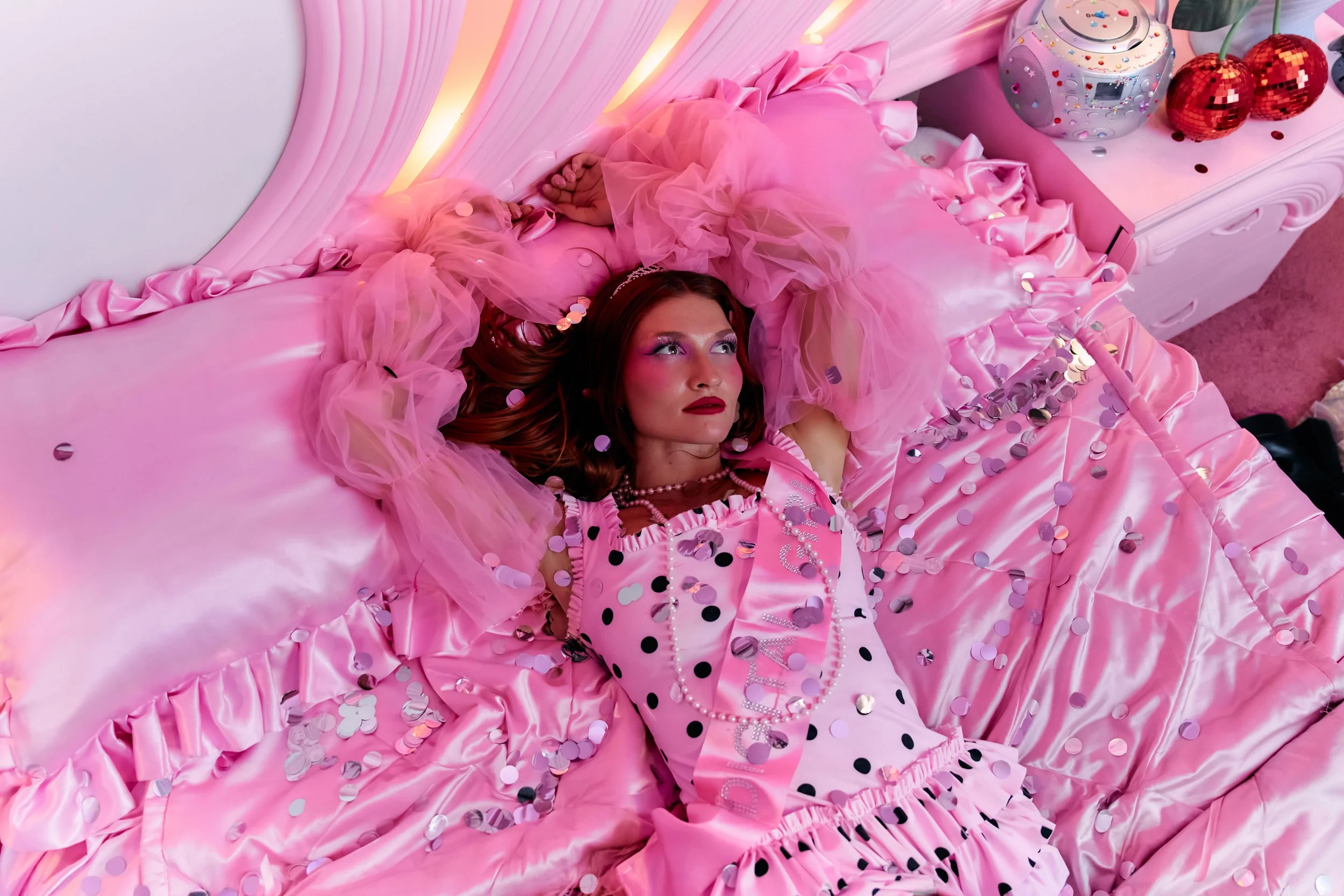
“This is me finally practicing what I preach — if I want others to be authentic, then I have to do that too. It’s a permission slip. You can either reinvent yourself or return to who you were at any given point.”
KP: Me too! When I speak about my early career with people — or to the press — I’ve always said that I wasn’t an “industry baby.” Similar to you, I had zero connections. What happened to me was totally happenstance. I think my career only blew up because in 2008, press meant a lot more than it does now. We didn’t have social media. So I landed one huge article and it launched my career for almost 20 years. I don’t think that exists anymore.
ML: I don’t think it does either.
KP: That’s sad though, right?
My parents didn’t know anybody. My dad was a pharmacist; my mom was a school teacher. But the one thing we did have was being in New York. I never really thought about that until having conversations like this one. You take it for granted. Then you talk to someone who grew up somewhere else, and you realize how lucky we are.
ML: Oh my god, totally. I didn’t have any connections either. It was just my piano and a dream. But New York is such a resource, and you don’t realize it until you go elsewhere. You meet so many people. You can audition for things. I was doing cattle call castings for Spring Awakening on Broadway with my friends. That was just normal.
We went to LaGuardia, which is a public school —
KP: Oh okay, Miss Talented! [Laughs]
ML: [Laughs] It didn’t feel that way back then! Everyone else had been on Broadway or in the opera, and I felt like a fly on the wall — I just liked to sing and didn’t know music theory.
But we got student passes to go see shows for free. You’d sit in the orchestra pit and write reviews. That was our homework.
I talk to my boyfriend — he’s from Minnesota — and he’s like, “That was the dream — to visit New York and see a Broadway show.” That was just my weekend. It was very special. One of one.
KP: It’s wild.
To switch gears, you’re primarily known as the lead singer of MisterWives, but you’ve recently stepped out on your own as Cherry Bomb. After more than a decade of fronting the band, what internal or external shifts made this feel like the right moment to step out into a solo project?
ML: That’s a great question. The band got to a point where a break felt necessary as well as deserved. We had been doing this for 14 years and really never hit pause. It felt like the right time to say that we’ve done so much — we can come back to this when we feel energized instead of burning ourselves out.
Having choices is power, especially in this industry, where we’ve been through everything. We were like, Let’s not kill ourselves. Let’s revisit this when we feel more inspired.
Within that time, I had this itch that needed to be scratched — parts of myself that didn’t feel appropriate or just didn’t fit into the band. Cherry Bomb is very connected to who I was as a little girl — wearing bows at school, singing “Respect” at the talent show, very maximalist pop. MisterWives was maximalist, but you’re in a band with four other people, so that vision gets diluted.
This was a really good exercise in learning what I like without thinking about what everybody else likes. I’ve been in the band since I was a teenager, so I’m rediscovering myself.
Even just talking about fashion — I have a closet full of sparkles and feathers and all of these things. I thought that this would be a really fun time to step into parts of myself that had been dormant, to reconnect with that, and let it be an exercise of authenticity, trusting my gut, and relearning who I am.
KP: I love everything about it. We’ll get into that more later.
You’ve described Cherry Bomb as a “reclamation rather than a reinvention.” What were you actively reclaiming?
ML: I came out of the womb like a firecracker. That’s where the name comes from. I could not be tamed — I was such a diva.
When I was making a trailer for the project, I found old videos from talent shows where I was being introduced as “the fabulous diva.” I was always in my own world. [Laughs] But I got made fun of for my outfits — for not wearing what was trendy, for loving to sing and write.
You don’t necessarily abandon those parts of yourself, but the older you get, the further away you get from them. Now I’m 33, and you hit a point where you realize that the fire is still in you. That little girl is still there. I want to honor her now as a woman and reconnect with her — especially in this industry, where they say that they believe in you and then try to change everything about you. I’ve never fully bent, but hearing that time and time again over your formative years really starts to mess with your confidence.
So this has been all about rebuilding that muscle that I had when I was five — when I didn’t doubt myself.
KP: That’s what I love — it’s not about becoming someone new; it’s about rediscovering who you always were.
ML: Exactly! People keep asking if it’s a new persona, and I’m like, “No, this has always been me.”
This is me finally practicing what I preach — if I want others to be authentic, then I have to do that too. It’s a permission slip. You can either reinvent yourself or return to who you were at any given point.
KP: So well said. I love everything that this is about.
Cherry Bomb confronts themes that include industry misogyny and also religious trauma, as we just spoke about. Why did this feel like the right vehicle to explore those topics openly? Did the timing of it have anything to do with it? We’re in 2026, which isn’t the best timeline. [Laughs]
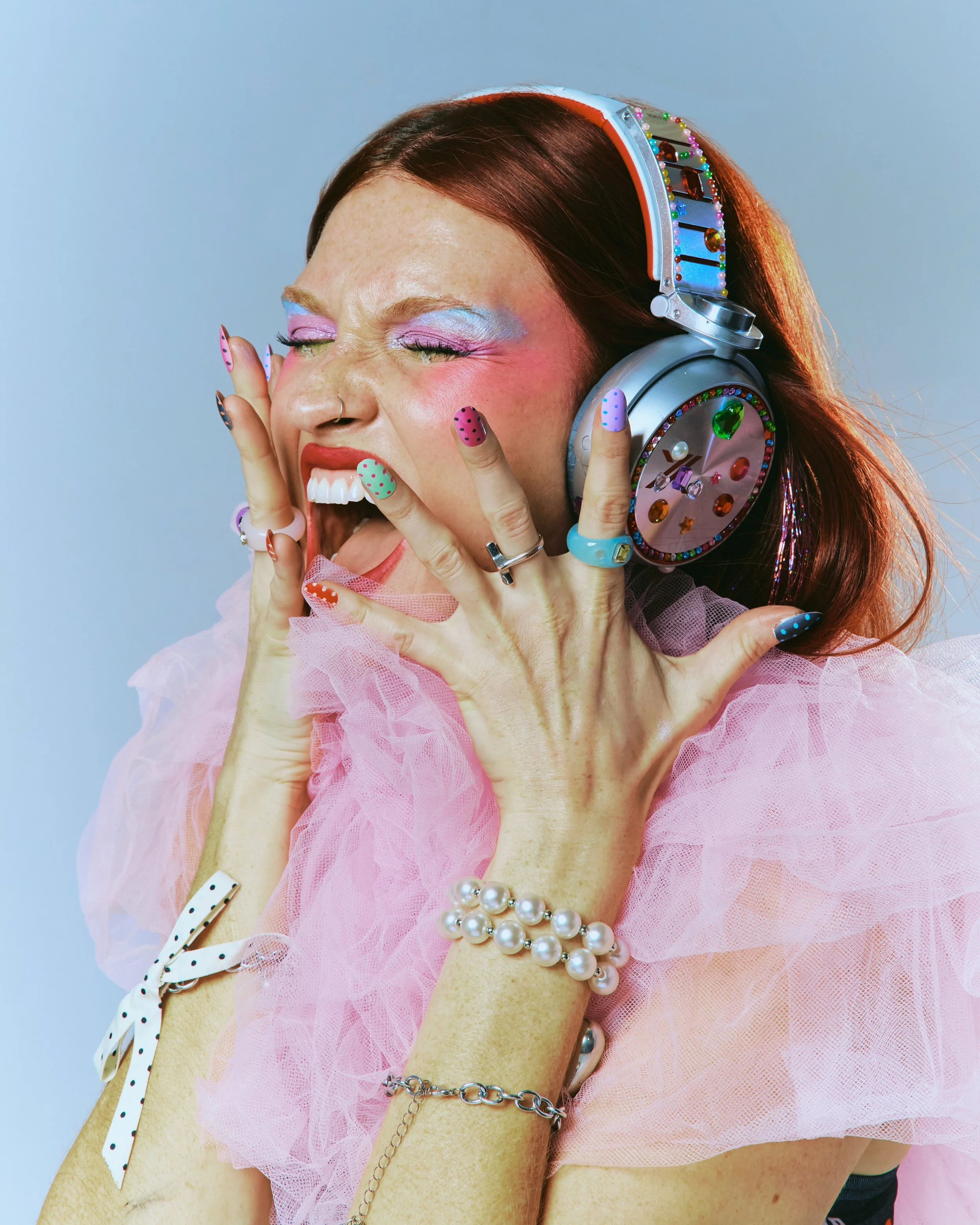
“For people who don’t feel safe or accepted, this is our space. We can make it our own.”
ML: [Laughs] Right? My religious trauma alchemized into so much shame, and I want this project to be an unlearning of that — like exposure therapy. I think that’s incredibly important right now, with what we’re going through with this administration — the patriarchy has never felt more powerful. I think we need to both look to each other and to art as signals of hope. We need to push ourselves to rebel against a system that’s stripping us of our rights.
We’re reverting back to a really strange cultural moment — the whole tradwife thing, the conservative aesthetics, the way that we’re dressing and behaving… I’m not knocking anyone who wants that life, but there’s been a big cultural shift backwards.
I think when you look to music and fashion and art and film, they respond to preserve the progress that we’ve made. We need to help people feel like they can be themselves in a world where it’s not feeling safe to do so, especially for queer people, women, and people of color.
KP: We need all of that now more than ever.
Similarly, there’s a strong emphasis on autonomy throughout the entire project. What were you no longer willing to compromise on, and what advice would you lend to women who are still learning to claim that same agency in their lives?
ML: Oh, it’s hard! Honestly, that’s something that I’m still learning. I feel like Cherry Bomb is helping me reclaim my autonomy. I’ve always been strong-willed but also so riddled with doubt. I think in order to have autonomy, you have to not doubt yourself — you have to trust yourself. I often think that our experiences as women teach everything but that. From personal experience, if you don’t trust your body, then you turn on yourself. This has all been an unlearning of the fact that shame is not mine to carry.
Through that, this project is forcing me to be embodied. That has been the greatest gift of all of this — getting back to feeling in control of myself. We can’t control what’s happening externally, but I can control who I am now, how I respond, and how I navigate in this world. It’s amazing that you can grow alongside it.
I think that’s really important. This project isn’t “I figured it out; here’s the answer.” I don’t know anyone in life who feels 100% certain. It’s not binary — it’s that gray middle area, and Cherry is pushing me to be the bridge back to myself.
I’m really thankful for her, and that’s why having a moniker was helpful. It’s coaching me through this project. It’s important for me, but I hope that it’s important for anyone who listens to it and connects to the music — that it mirrors something back for their own life.
KP: To return to what I said we would earlier, Cherry Bomb feels intentionally maximalist, in both sound and style. What led you to lean into that direction? Did it feel like a rebellion against restraint?
ML: It’s exactly that. Maximalism is a rebellion, especially in the purity culture that’s happening right now. I felt like I had to crank the dial even more.
MisterWives was already maximalist, but in response to how much oppression is happening, I was like, This has to go further. We have to turn it to 10, even 11.
Also, as I said, my experience in music and life has always been that I’m too much. I’m too loud; I dress too crazy. Even recently, I played a song and someone said that it was overwhelming. And I was like, “That’s a bad thing?”
KP: It’s not!
ML: Right? It isn’t! For Cherry, the goal is to make those who are comfortable uncomfortable, and those who are uncomfortable comfortable. That’s been the ethos. So when it ruffles feathers, when people are upset, I feel like it’s doing the right thing.
KP: As the saying goes, all good art does that, right? It comforts the uncomfortable and discomforts the comfortable. That’s what it’s supposed to do.
ML: Exactly. For people who don’t feel safe or accepted, this is our space. We can make it our own.
KP: Absolutely.
When speaking about the music video for “Never Be Me,” you said that it was about refusing to settle for a comfortable hell when an uncomfortable heaven is just at the finish line. I felt that very deeply. What did that look like in your own life, and how did you find the strength and confidence to push through and find happiness on your own?
ML: That’s an amazing question. I feel like who doesn’t relate to that at this point? Settling, especially in relationships, can reenact what you learned as a kid — that you’re not lovable. I have an amazing mom, but you can learn at a young age that you are unlovable. Then you look for how to be loved in all the wrong places — in ways that feel familiar. You don’t realize that there are people out there who could love you properly, or that you don’t even need other people! You just keep subjecting yourself to the same pattern because it feels familiar.
This project — and that song especially — forced me to realize how much I was addicted to the, “You don’t love me; let me change your mind. Let me prove myself.” All that does is make you smaller and give another person more power over you. You bend into impossible shapes for someone who doesn’t even love the real you. I had to cut that cycle. Autonomy is about choosing to break that.
KP: I really fucking love that song. It’s so good! And speaking of the song, it centers on letting go of a loveless love. How did writing it reshape your understanding of the dynamic that you were involved in? And what advice would you give to women stuck in those relationships?
ML: Well, the key is that you’re not stuck. It feels like you don’t have a choice, but you always do. I talk about this with friends who stay in relationships for years and say that they can’t leave — you always have a choice. Even in my own life, with my ex-husband — we’re still best friends, so I’m not villainizing him — but I remember feeling like I didn’t have a choice. We were in a band and our siblings were married with kids — everything was intertwined. It truly felt like there was no way out. But that’s a tragic way to live. You can start over at any point. We’re conditioned to think that we have to stay in bad relationships — for financial reasons, age, or expectations — but those standards aren’t real. They’re not fair to who you are or the life that you want and deserve.
The word “stuck” isn’t real. You have choices — it’s just fear that keeps you there. I want people to feel empowered to make that choice for themselves.
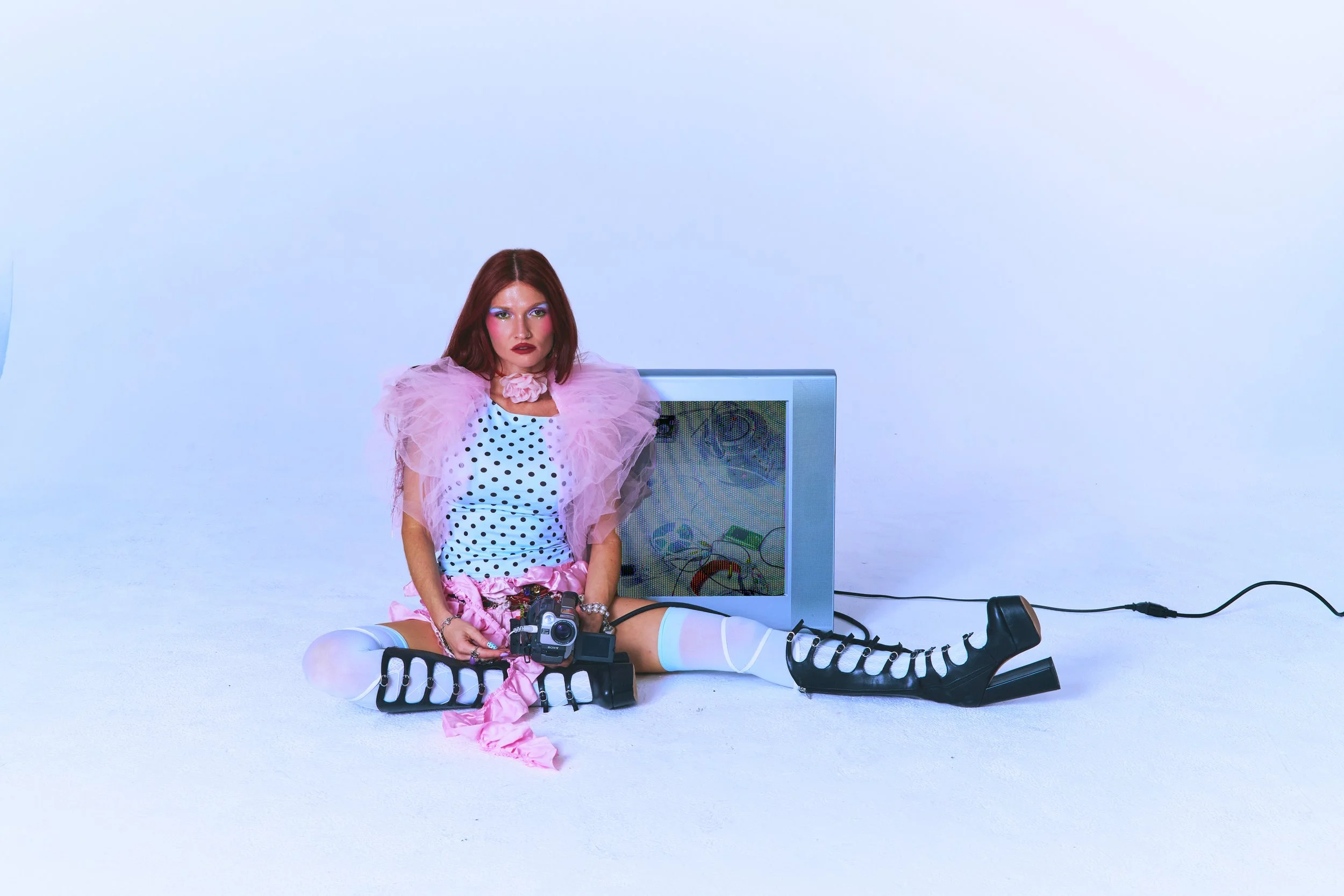
“Music creates community, and I’ve seen so many people find safety, identity, and belonging through it. I want to give that back.”
KP: I think that’s so important. I’ve seen that in my life so many times — I can sympathize deeply.
Your second release, “Digital Girl,” introduces another layer to the Cherry Bomb universe. What aspects of identity or culture were you exploring?
ML: It’s my love-hate letter to my dreams and the system that they exist in. The pressure to conform, while also wanting to rebel. I love music more than anything, but the industry is horrific. I still choose to stay because music is so meaningful to me, but it’s never been harder. And I’m not even talking about dreams — just existing in the digital age is difficult. We’re inundated with comparison, with doom scrolling — it’s truly terrible for mental health.
And music is now bottlenecked through that. The industry has dissolved into being about numbers and viability. It was a confession of frustration. I’m in this system, but I’m not willing to bend to it.
KP: This goes back to what we were talking about earlier — I started my career in 2008, and everything was in print back then. You can’t even access my earliest press anymore! In a way it feels like we’ve truly lost something. You could evolve, you could change — now everything is chronicled online forever and, concurrently, misinformation spreads so easily. One incorrect thing gets repeated over and over.
ML: It’s really so much harder now.
KP: It makes an already difficult industry even harder. And success feels inherently tied to social media. I had to make a decision — I left fashion at the age of 21, even though I was still really successful. People thought I was crazy, but I didn’t want to do the social media thing and I was tired of fighting with my team. Now it’s almost impossible to succeed without it. It’s all numbers. You see it in acting too — a worse actor gets the role just because they have more followers. It sickens me.
ML: Exactly. And it’s not sustainable. It truly sucks the joy out of the art. I love creating and performing, but then it becomes about algorithms, and it just drains everything. I don’t want to be like, “Look at me.” I really just want to make art.
KP: Exactly. True artists don’t want to do that. Most are introverted. They just want to make the work — not market themselves to the masses. And now the system rewards the opposite. People who actively seek out attention get elevated, and the real artists struggle.
ML: It’s well and truly not sustainable. Everyone in the arts feels this. It’s exhausting and it makes you want to quit. But I love music too much, so I try my hardest to exist within it. It’s a constant tension.
I often think about how I don’t want Cherry to come off that way. I struggle with that a lot.
KP: Honestly, it doesn’t read that way at all. It just feels like a celebration.
ML: That means a lot, because it’s hard. Especially for younger generations who are born into this — they don’t even have a “before” to compare it to! It’s not their fault. It’s just an impossible system — I’m trying to navigate it without losing myself.
I don’t want to be disingenuous, and that’s the hardest part. I’m grateful that I have a good team now — people who care about me as a person. That makes a difference.
KP: Your team is awesome! I really love them.
ML: I’ve been more intentional about who I surround myself with. I’m okay with taking the slower path if it means staying true to myself.
KP: That’s the goal — to have as normal of a life as possible and still do all of this.
ML: Exactly.
KP: To be visible for the sake of your work, but private in your daily life. That balance, to me, is everything.
ML: That’s the dream.
KP: As you actively build this world of Cherry Bomb, what do you hope listeners take away?
ML: I hope that Cherry Bomb is a permission slip for people to be their truest selves. Whether you’re told that you’re too much or not enough, all of that is welcome here.
Music creates community, and I’ve seen so many people find safety, identity, and belonging through it. I want to give that back.
KP: What would you tell your younger self?
ML: To be louder.
KP: What advice would you lend to women about life, work, or love?
ML: The power of no. “No” is a complete sentence.
KP: What do you feel makes a provocative woman?
ML: An embodied woman — in whatever way that means to you.
Photography: Matty Vogel