Tish and Snooky Bellomo on Punk, Manic Panic, and the Beauty of Aging Disgracefully
Long before brightly colored hair became a mainstream form of self-expression, Tish and Snooky Bellomo were already living in vivid color.
As the trailblazing founders of Manic Panic, the Bronx-born sisters helped transform a fringe aesthetic into a global language of individuality, rebellion, and creative freedom. Emerging from the gritty, incandescent nightlife of 1970s downtown New York, they were not just witnesses to the birth of punk — they were active architects of its visual identity.
Their journey began in the orbit of legendary venues like CBGB and Max's Kansas City, where musicians, drag performers, artists, and outsiders gathered to build a new cultural vocabulary. In 1977, the sisters opened the original Manic Panic boutique on St. Mark’s Place in the East Village, a DIY haven that sold vintage clothing, handmade accessories, and imported punk fashion. What started as a small shop catering to New York’s underground soon evolved into something far larger: a beauty brand that would redefine how people think about hair, identity, and self-presentation.
At a time when unconventional hair color was seen as radical — or even threatening — Tish and Snooky created products that allowed people to experiment with vibrant shades both safely and creatively. Their line of semi-permanent dyes quickly became a staple among musicians, club kids, and punks, eventually reaching far beyond New York City’s electric subculture. Today, Manic Panic colors hair across generations and continents, beloved by artists, celebrities, and everyday people alike.
Yet their influence extends far beyond beauty. From the beginning, the Bellomo sisters built their company around ethics that were strikingly uncommon in the industry: vegan formulas, cruelty-free production, and a steadfast commitment to inclusivity long before those values became market trends. Their work helped normalize self-expression through appearance, proving that hair could be both a personal canvas and a political statement.
Nearly five decades later, Tish and Snooky Bellomo remain the grande dames of punk entrepreneurship — defiant women who built a global brand without abandoning the rebellious spirit that inspired it. Their legacy lives not only in the colors that bear the Manic Panic name, but in the countless people who have found confidence, community, and joy through the radically transformative act of dyeing their hair.
KP: Can you take us back to the very beginning? What drew you — two sisters growing up in the Bronx — to the emerging punk scene, and what ultimately pulled you downtown to the East Village?
TB: The 1 train.
SB: [Laughs]
TB: It took about an hour, at least — sometimes an hour and a half at night. But we were introduced to the New York nightlife by our cousin, Jeannie, who took us to Max's Kansas City when we were — at least I know I was — underage. That was one of the starts of us getting into the whole New York nightlife scene. And then we transitioned over to CBGB and 82 Club.
SB: We were fascinated by the whole downtown scene from our first introduction to Max's, and then to CBGB. We would take the one train down from the last stop in the Bronx. By the time we got down to Max's, we’d have all our makeup on, and we'd wear what we called our “subway shoes,” which were these little flats. Then, when we'd get a block away from Max's, we'd hide our subway shoes in the bushes and put on our high heels and pretend that we were just getting out of a cab. [Laughs] Instead of an hour-long subway schlep from the Bronx. Not so glamorous! But we loved it, and we loved all the people that we met.
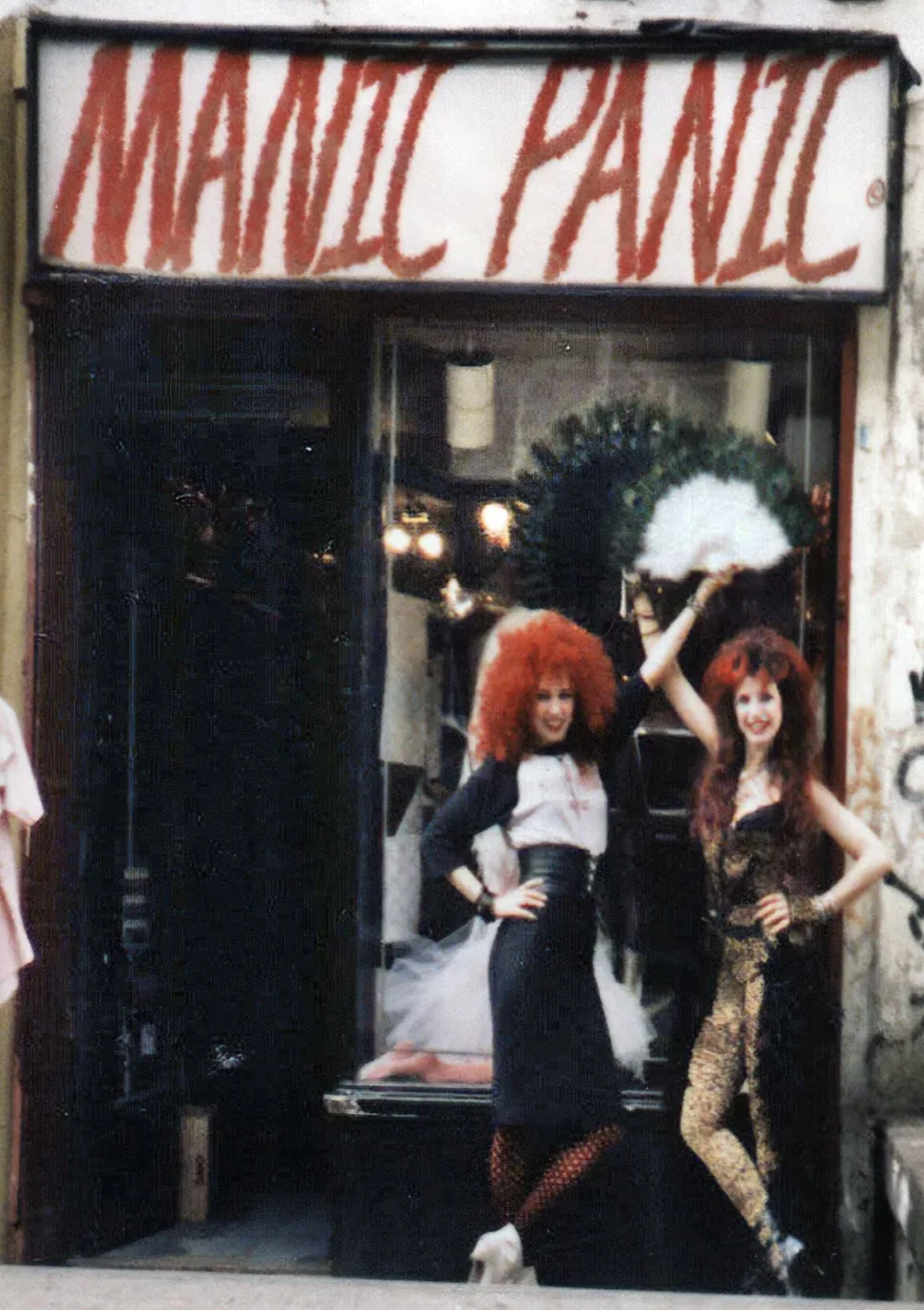
Early on, we met these performers — artists Gorilla Rose and Tomata du Plenty — who really changed our lives and got us into this wacky show on the Bowery across from CBGB called The Palm Casino Revue.
I think it was in — what was it, Tish? ‘ 74?
TB: Yeah, I think it was ‘74.
SB: And then we met all these other people, and it just snowballed — that’s just where we wanted to be. We would leave the house late at night sometimes, like midnight, to go out. But we just loved going downtown. And our mother would say, “Oh, girls, this is such an unhealthy life you're leading.” And we’d just say, “Oh, mom!” [Laughs]
TB: We’d get home while she was leaving for work.
KP: Well, that’s the best time to come home! [Laughs]
TB: Right! The changing of the guards. And we learned a lot of our makeup techniques and glamour from all the drag queens in the Palm Casino Revue and all of the downtown people we met through Max’s and CBGB — all the glitter and glam.
KP: That's amazing. It was a magical time in New York.
SB: It was.
TB: We were very lucky.
SB: It was so magical, and we were so lucky to be there then. It wouldn’t happen again. There was no money — nobody had any money — but everybody was creative and wanted to have fun and perform and just be ourselves and put on these wacky shows.
KP: Many people who find themselves on the fringes of society have this pivotal moment when they realize they're not alone and that their style, attitude, or sense of otherness resonates with others who are also on the fringes. Do you remember a moment when your aesthetic began to echo back to you in the world, signaling that it was becoming something larger than just individual expression?
TB: I think it happened to us a few times, because we were always on the fringe, always on the outside. We moved so many times, and we were very poor — our father left — so we were always kind of on the fringe. As we grew up, we went to the High School of Music and Art and we were hippies. Then I became heavily into the underground gay club scene, where they had the best music ever and lots of dancing. Then we got into Max's and CBGB and all the different places.
Finally we found ourselves, I think, at CBGB — that was when we blossomed the most probably and found the people who were very much like us. It was a whole scene that wasn’t really a scene yet. It was just starting; it was in its infancy stage. So we were all each other's audience — everyone was in bands supporting each other.
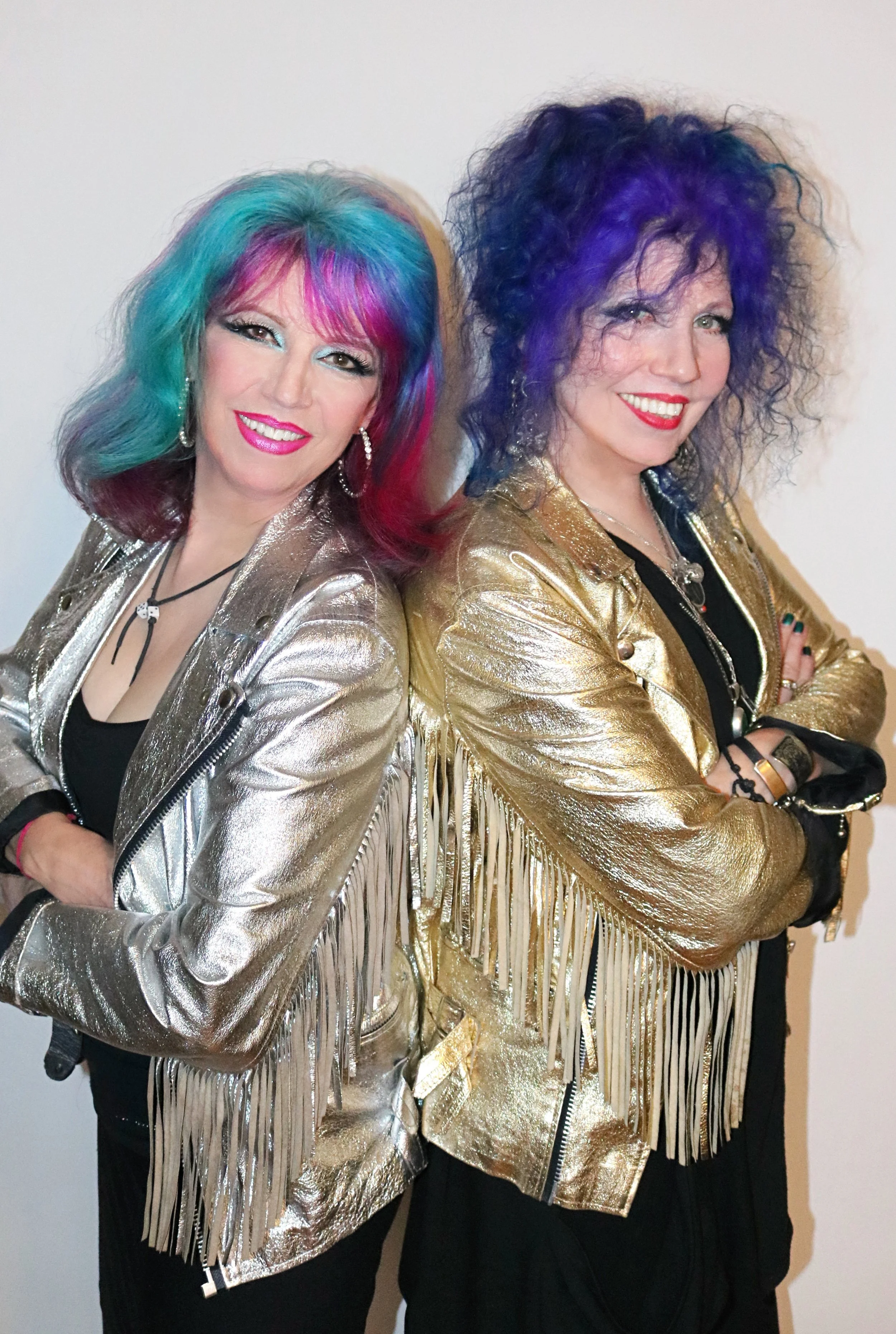
“Our mother taught us how to make something out of nothing. If you didn’t have a curtain rod, you’d use a string and two nails.”
SB: And everybody always loved our style and aesthetic. Any time we’d go out, people would ask where we got whatever we were wearing, which was probably in thrift shops or in the garbage. [Laughs] Tomata taught us how to garbage-pick. Then we thought, Well, maybe we could sell this — sell our whole look — as a sideline to our performing career. And from the get-go, we got so much attention from the press, which changed our lives and changed our course of action. We realized that people were liking our style and wanted to look like us and be like us.
TB: And we had to pay a lot more attention to our boutique — which was the first punk boutique in America — but we didn't realize how much work owning a shop would be.
KP: Well, that was my next question! So you guys opened in 1977 on St. Mark’s. What were the initial challenges of opening it — socially, financially, or culturally? I'm sure it was quite the undertaking, especially being the first, right?
SB: It was! It was all of the above. We were women, we were young, and we didn’t know what we were doing. We didn’t know about business.
TB: Right, and we had no money.
SB: We really had no money.
TB: I can’t remember how many months it took until we were actually in a position to pay our rent through sales. That took a while, but we made a lot of items ourselves. We found unused vintage, which was very popular back then — spike-heeled shoes and stuff that went along with the punk aesthetic — and dug things up. We brought stuff from the UK over, then brought stuff over there to sell that they didn’t have. We were doing import-export on a small level in suitcases, hoping we wouldn’t get caught.
SB: Yes, we were international smugglers.
KP: [Laughs] I love that.
SB: Our mother taught us how to make something out of nothing. If you didn’t have a curtain rod, you’d use a string and two nails. She raised us like that. And that’s how we were then, and still are to this day — really DIY. It has served us well.
KP: Yeah, I would say!
TB: I mean, we moved into a shop that was really awful-looking and dirty and depressing, but we painted the walls, we even painted the floors black — and I think the ceiling, too. We had no racks, so Snooky’s boyfriend drilled holes in the wall and we stuck the spike heels into the holes.
KP: Oh, wow! That's cool. I really love that actually. [Laughs]
SB: Yeah, it was a cool, interesting way to display. It was something normal people with normal financing would never have thought of or done simply because they didn’t need to. But necessity is —
KP: The mother of invention.
SB: Exactly!
KP: And so — through all of this — you gradually shifted from a punk boutique to a hair color powerhouse. How did that evolution unfold from the inside for you? When you transitioned from running a full store to focusing primarily on hair color, did that pivot feel like a narrowing of your business model, or were you excited and saw it as an opportunity to expand?
SB: Well, it was natural.
TB: Yeah, it was natural because we went with the flow. Something happens, and it causes a reaction. We lost our lease — what were we going to do? We couldn’t find a place because the rents were really high at that point.
SB: And we had already started wholesaling the hair color.
TB: Yeah, but on a smaller level, so then we decided, Well, screw it. We'll just do the wholesale for a while until we find a space. And that went on for at least a year. We were working at Snooky’s boyfriend's apartment, which was four flights up or something.
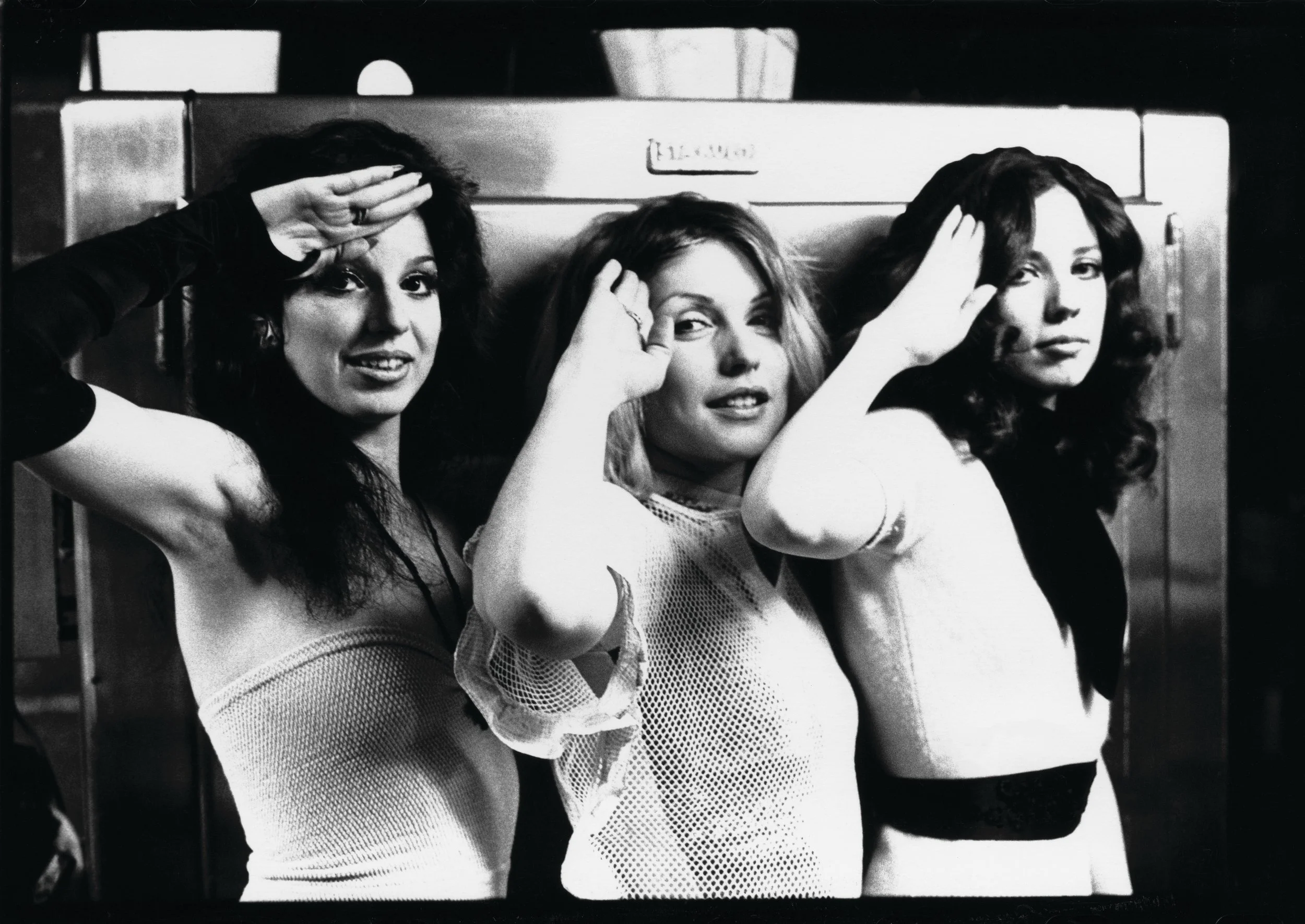
SB: And it was a studio!
TB: It was so tiny. We were just packing up boxes of hair dye, dragging them to UPS, and making sure we got there before it closed. I’d be sealing boxes in the backseat of the car, speeding down the street — we did whatever we had to do to get the job done and keep making money.
KP: Well, that really worked out too, right?
TB: Yeah!
KP: All of these things did — it's amazing.
Every company has a turning point that lights the fire to their success. Do you remember the moment when you realized that vibrant, unconventional hair color wasn’t just a symbol of subculture, but a more mainstream facet of personal identity and self-expression?
TB: I think when we realized how big it was getting was when we started getting larger customers. We had been selling to little boutiques similar to us — they all took the lead from Manic Panic and opened up all over the country. They were all buying from us, but then we got this huge order from a company called Hot Topic. We were like, “Who are they? Why are they buying so much?” We had never even been in a mall, really — we were downtown New York people, living in the Bronx. We didn’t go to the malls, so we didn’t know what Hot Topic was. But it turns out it was this big chain and they were trying to transition out of cutesy little-girl stuff into more edgy things, and the first thing they brought in was Manic Panic. That’s when we realized what expansion was like. And then Sally Beauty took us on, and they were even bigger. Huge! So we realized then that it wasn’t just one little trend. It was growing then, and it still is. And you know — gabba gabba, we accept you. Everybody can use Manic Panic. We've always been the inclusive store, the inclusive brand, the inclusive people. Everybody is welcome in Manic Panic’s world.
KP: I had a question about that too, because the impact and use of Manic Panic has spread far beyond the punk community. Did that surprise you?
TB: Well, I'm happy.
SB: It's amazing. We're so happy that the world has finally caught up. What we've always loved for nearly 50 years is now so much more accepted. You don't get beat up for looking different as much as in the old days, when Tish got sucker-punched and I got ridiculed. We all got ridiculed just walking down the street — harassed and tortured, but it's come a long way. It’s really great. And now celebrities — actors, actresses, models — everyone wears it.
TB: Everyone! We see children with Manic Panic hair. We see people even older than us!
KP: That's really the coolest to me, yeah.
TB: I think it's great, especially when people with white hair go colored like ours, because they don’t have to bleach it anymore. It’s fun. And a lot of people are retired, so they don’t have to report to work where wearing green hair might be a problem. They can do whatever they like, and that’s fantastic. We welcome everyone. Manic Panic isn’t just for gorgeous, beautiful people or whatever. It’s for everyone.
KP: Hair is both very personal and political. Over the years, I'm sure you've heard countless stories from fans whose lives were greatly impacted by changing their hair color. I was just wondering if there was any particular moment or a story that stuck with you the most about someone's personal journey.
SB: Oh my god, yes.
TB: Purple Rose, right?
SB: Purple Rose, who was this older woman — I guess she was in her eighties or something. She wrote to us saying how much Manic Panic changed her life. It made her so happy in her twilight years because before she colored her hair purple, she said that she felt invisible. But now that she had purple hair, people talked to her! She got all of this attention and love from people wherever she went. She just loved it and wrote a poem about Manic Panic. It was just so great to hear.
And, you know, in the ‘90s when people still wrote letters, we'd always get fan letters. Another one was from a woman or young girl who was like on the verge of suicide, but she colored her hair with Manic Panic instead and she said how much it saved her.
TB: Yeah, it saved her life! And when we were at the Rainbow Convention, this wonderful convention of hairdressers who all embrace vivid color, we got a Lifetime Achievement Award from them. We went up to accept it — which they were shocked that we did — but we did. And they were the most wonderful — it was the most wonderful crowd of people. And they were all us, basically, you know? They were all just on the edge, like we are. Every one of them that came up to us — we couldn't even walk without somebody taking a selfie or telling us their story — but so many of them told their story about how the only reason they're a hairdresser is because of Manic Panic. It's so satisfying to know that you're doing something that makes people happy instead of writing out parking tickets or something.
“We welcome everyone. Manic Panic isn’t just for gorgeous, beautiful people or whatever. It’s for everyone.”
KP: Yeah, right? Absolutely. Well, thank god for that!
Along with being personal, hair is also deeply political. I just buzzed my head for the first time since college.
TB: It looks great, by the way.
KP: Thank you! Oh, that means the world! [Laughs]
SB: Yeah!
KP: After this is over, I need to talk to you guys about which black hair dye you’d most recommend — that’s the last step. [Laughs] But buzzing my head again felt pretty inevitable in these very tyrannical times.
I imagine what your answer might be to this question, but I want to ask it anyway. Do you view having colorful hair — or a particular hairstyle in general — as a personal or political act?
SB: It can be both.
TB: It's totally both, yeah. It's whatever you want it to be. I think some people do it for political reasons, but others do it because they like the look or it's in fashion at that particular time. It all depends! Hair has always been a statement. I guess whoever views it is viewing it one way or another. I know I got punched in the jaw for my statement and knocked out cold — with my clothes and my hair, so that's just the way it is!
KP: It happens, thankfully, less frequently than it used to.
TB: I feel we've made some kind of impact, letting people be creative and express their views on whatever is going on globally. It's definitely a statement.
SB: And I think it’s also — for us and other older gals — an anti-ageism statement. We get laughed at, but in most cases, people love it.
KP: I think that's the coolest — when I see more mature women with non-traditional hair color, I love it so much. It really makes me happy.
SB: Me too!
TB: You get so many people saying how much they love it, and other people scowling and looking at you like you’re crazy. But we just— a big Al Goldstein fuck you.
KP: [Laughs]
TB: But we're always living — aging disgracefully. We're aging disgracefully. That’s what Snooky and I do.
SB: And proud to be.
KP: I love that. I really love that so much.
So as founders of a woman-owned, independently operated brand launched in the late ‘70s, what barriers did you run up against in a beauty industry historically dominated by — and traditionally run by — men?
TB: Every barrier.
SB: Sexism. Every barrier — not just financial, but not being taken seriously because we're women. And when we were young — and now when we're old — we don’t always get taken seriously. It’s unbelievable that in this day and age it could still be like this.
TB: It is.
SB: We were at a trade show and I asked a customer if I could help him, and he said, “No, I want to talk to him,” and pointed at Tish’s son who was helping with sales. He wanted to talk to the man.
KP: When was this? This was recently?
SB: Yeah! Last March!
KP: What?!
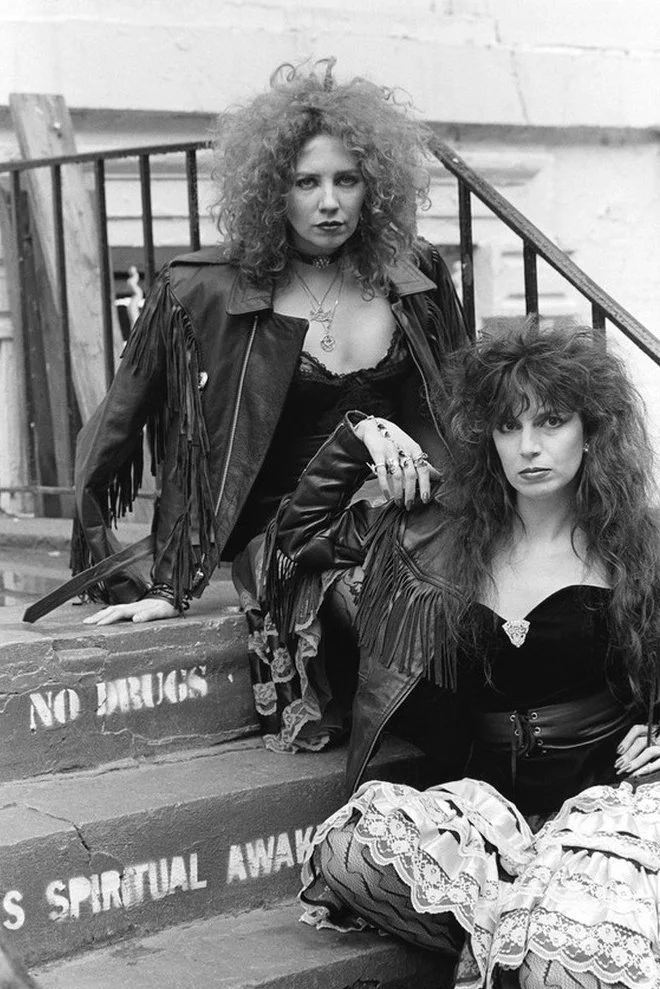
“We’re so happy that the world has finally caught up. What we’ve always loved for nearly 50 years is now so much more accepted.”
TB: We do international trade shows, and there are still some cultures that refuse to speak with women, won't shake your hand.
KP: Even though you guys are the owners?
SB: Yeah! Even though I was the owner, he didn't want to talk to me.
TB: These people still exist who won't speak to us. Certain cultures will not shake your hand, they will not even let women exchange money.
SB: And it's not just because we're women, but because we're not normal-looking, business-looking women. So that's strike two against us — not being taken seriously. But we usually bring some men along to trade shows.
TB: We have to! We have to have men at trade shows because sometimes they just won't deal with women at all.
KP: I understand that. Especially culturally, and then it becomes a barrier that you can’t cross even if you wanted to.
TB: You’d think it couldn't exist today, but it does. And even if it's not a culture that won't touch you, there's still the idea that women are not as important in business as men are. And I’m sure if we looked at statistics, men are still probably getting paid more for the same job that a woman might get for 10 or 20 thousand dollars less. I have a feeling that's still there as well.
KP: Definitely. Wow, that's unbelievable.
And one other thing that I wanted to touch on, because I know it's so important to you guys, and in general — you've kept Manic Panic completely vegan and cruelty-free from the beginning — long before it became an industry trend. What drove that decision for you personally? And were there moments when maintaining those standards was difficult?
SB: We've always been huge animal lovers. Ever since we were kids, we were obsessed with cats and rescued animals our whole lives. To this day, we rescue animals if we see them in need. It's part of who we are and how we live. We can't imagine it being any other way, and we'd never have it any other way. I can't believe that it could be any other way.
TB: We have had problems in the past where certain manufacturers — even though you specify vegan — send samples with an ingredient that isn't vegan, and you have to start over. It is definitely more difficult to remain vegan and cruelty-free. We won't even sell to shops in China. You can sell on Amazon or something like that, but not in any shops or department stores because they will test the products on animals. We just refuse to deal with countries like that.
SB: Yeah, we'd rather turn down the business than compromise our ethics.
KP: Well, that feeds into my next question perfectly.
I wanted to speak to your genuineness and authenticity as a brand, which is amazing to me. I think many people view the ethos of punk as being at odds with commercialization or broader financial success. I don’t personally find that true as long as the initial ethics of the company stay the same, but many make that argument.
I think it's incredibly difficult to keep those initial ethics intact as you grow and commercialize, but you’ve done a remarkable job. When I was preparing for this piece, I couldn’t think of many other companies that have blown up and grown the way you have while keeping that same energy and spirit. So what have been the biggest challenges in scaling the supply, distribution, manufacturing, or brand visibility of the company — especially when you're rooted in punk underground ethics — as you reached global popularity? Or, to put it simply, how do you stay so authentic to yourselves?
TB: Well, I think we’d be a lot bigger if we weren't. There have been a lot of knockoffs that have become very popular, and they're not ethical. They even lie about who owns the company. I think we'd be a lot bigger if we lost some of our ethics, but we won't. And if somebody thinks that we're inauthentic, then I would just say, “Fuck you.”
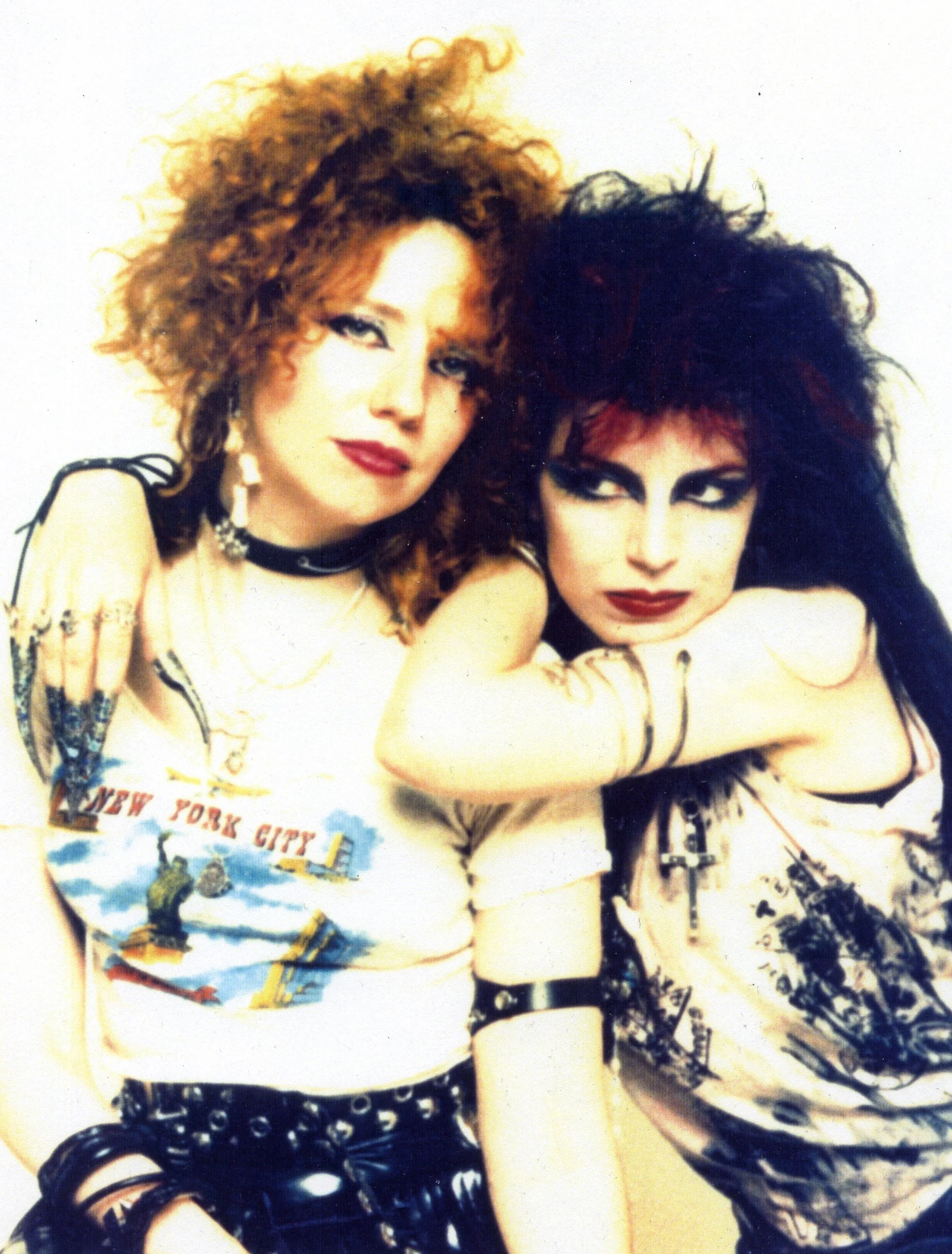
“We always say that if you can't get in the front door, then climb through the window. Do whatever you have to do to get it done.”
SB: Yeah, and we give a big percentage of our profits to charity every year. That was one of the reasons that we wanted to succeed — to rescue animals and save animals on a much bigger scale than we could if we were just punk rockers crawling under cars or whatever to rescue an animal on our own. We can do so much more good. And it’s not just with animals — it’s with everything: even cancer and LGBTQ causes. We can give money to all of these causes that we believe in. It's such a great thing and such a great position to be in — to have more of an effect than we would have if we remained small and just punk rock.
KP: When you think about Manic Panic decades from now, what do you hope its cultural legacy will represent beyond hair color trends and fashion cycles? What do you want to be at the core?
TB: Well, I hope we can always continue to do our work as far as animal rescue and donating to cancer research and any other passions of ours. We would love that to continue forever. It would be great.
SB: Yeah, we want the spirit of rebellion and the spirit of self-expression to carry on long after us. We want that to be our legacy and the spirit of giving back and helping the world as much as we can, one can.
TB: Yeah, and our mother was an artist. She named our company Manic Panic. She thought of the name.
KP: Really? I didn’t know that! It's a great name, that's amazing.
SB: Thank you!
TB: She was a single mother and just brought us up. I think we owe so much to her and she is truly behind the spirit of Manic Panic.
KP: You both deserve every bit of your success. I'm so happy to hear that.
And as women who have built a groundbreaking company in a male-dominated era — as we spoke about earlier — what advice would you offer to emerging female entrepreneurs navigating their own industries today?
SB: Don't take no for an answer.
TB: Ever. That's the worst answer that you can get. We always say that if you can't get in the front door, then climb through the window. Do whatever you have to do to get it done. A lot of people don't understand that and they give up — that's something that I think we've never done. That's why we keep going. We may have gone in different directions — we thought we were going to be on stage more — we still are on stage, but we thought that was our career — and then we ended up in retail and then in wholesale and now we're global. Everything happens for a reason. You have to take the negative and make it into a positive.
KP: Absolutely. One of my favorite sayings is if someone tells you no, you're simply asking the wrong person, right?
TB: Yeah! That’s true! [Laughs]
SB: Yes! [Laughs]
KP: And, more broadly, what wisdom would you share with women about life, work, or love?
SB: Don't take yourself too seriously!
TB: Definitely try to have fun with whatever you're doing. If it's not a pleasure — everything isn't going to be total pleasure — but if life isn't a pleasure, it's not worth it. You have to make every day fun in some way.
And as far as love goes, love is the most important thing. Love is all you need — it's true. It's that old Beatle hippie saying, but it's true. You've got to sometimes kiss a lot of frogs to find your handsome prince or princess.
KP: [Laughs]
TB: And I've kissed a lot of frogs, handsome princes, and whatever. So I think love is so important. And in everyday life, we all need to love.
KP: Especially today.
TB: Especially today! And also, understand people. Everybody's not the same. We have to stop being angry at everyone and listen to everybody.
KP: I think that's all very great advice.
SB: And live fast and dye your hair! [Laughs]
KP: [Laughs] Yes! That's the best one, of course! Yes.
And, finally, what do you feel makes a provocative woman?
TB: Are we provocative? [Laughs]
KP: [Laughs] Oh, I think so.
SB: I think being true to yourself. And not taking any bullshit.
Photography (in order of appearance): Paula Gately Tillman, Guy Furrow, Chris Stein, Tish and Snooky, Paula Gately Tillman, Tish and Snooky