Sam Quealy on Identity, Intuition, and the Power of the Night
There is something inherently nocturnal about Sam Quealy — not only in the gloss of Parisian cabaret and disco shimmer, but in the charged spirit of her work, which most vividly comes alive after dark.
Raised in a beach town in the south of Sydney, she carries an unlikely duality: oceanic calm paired with restless ambition. Before she was a solo artist, she was a showgirl in Parisian cabaret, high-kicking beneath feathered headdresses and stage lights. But spectacle alone was never enough. Paris, with its decadence and discipline, pushed her toward authorship. Music became the missing piece — a way to merge fashion, choreography, film, and performance into something unmistakably her own.
Sonically, Quealy thrives in extremes. Her sound pulls from disco, cold wave, Italo influences, and theatrical pop, yet resists easy categorization. There is drama without irony, sensuality without apology, vulnerability without fragility. On her sophomore album, JAWBREAKER, she sharpens that vision: less artifice, more raw vocal presence, more emotional contrast. The result is music that feels both nostalgic and immediate — built for the club, but intimate enough to bruise.
Beyond sound, Quealy’s influence lies in embodiment. She represents a strain of feminine performance that is maximal, self-possessed, and defiantly theatrical in an era that often demands palatability. Her stage presence — instinctual, almost possessed — reframes provocation not as shock value, but as radical honesty. In queer spaces especially, where she has long found kinship and creative oxygen, her work resonates as a celebration of fluidity and chosen freedom.
If legacy is about creating a world that others can step into, Quealy has already carved out one lit by neon, ruled by instinct, and electrically alive with unapologetic feminine power.
KP: I was born in Brooklyn but grew up in a nearby beach community, similar to you. That mix of city intensity and coastal calm intricately shaped how I both see and create. How did growing up in Australia, with its blend of natural beauty and cultural edge, influence you personally, and how do you see it reflected in your work today?
SQ: Growing up in a beach town in the south of Sydney gave me a calm mindset and a strong sense of self. Being by the ocean taught me to slow down and take things in, but it also made me aware that there was so much more to explore. That mix of groundedness and curiosity still shows up in my work. It is all about balance — staying connected to where I’m from while always searching for something new.
KP: You have said that when you first moved to Paris to work in traditional French cabaret, you loved life as a showgirl, but eventually felt the need to communicate more deeply through your art, which led you to start making music. What was it about Paris, its culture, nightlife, or energy, that unlocked that shift for you?
SQ: Paris inspired me completely — its history, the culture, the people that I met through nightlife, the language, and the music. It felt like stepping into a new world, and I wanted to absorb everything. I have always loved the glamour of Paris — there is this effortless sense of style. But I also wanted to take that energy further. Being there pushed me to merge everything I love — fashion, film, dance, and choreography — into one cohesive project. Music became the missing piece that tied it all together, and that is when things really clicked artistically.
KP: I have to backtrack a bit to your life as a showgirl, because I really think that’s the coolest. My love of cabaret stems from Weimar-era Berlin and all of its androgyny, sensuality, and eccentricity, which feels especially vital in these increasingly far-right times. What first drew you to cabaret, and what was your life like as a showgirl?
SQ: Honestly, I was so excited when I found out that I would be dancing in cabaret — the beautiful traditional costumes, the high kicking French can-can, a full face of makeup every night, feather boas, wigs, tits out... Who would not love that job? There is something incredibly freeing about being on stage with other women, when the whole show finally clicks after rehearsing every detail and moving in sync. But even though I loved it, I knew that I wanted a solo project, something where I could control the narrative and put my own vision into the world.
KP: You‘ve said that you have always loved extremely strong, feminine women, and that embodying confidence through your body and voice makes you feel liberated. When you perform, how do you tap into that sense of feminine power and intuition? How much of what we see on stage comes from instinct versus intentional character work?
SQ: I think it is instinct. I always say that I’m possessed on stage. I kind of just black out and then suddenly it is over. I feel strongest on stage and the most myself, and I love transferring that energy into my audience. It is a lot of fun performing my concerts.
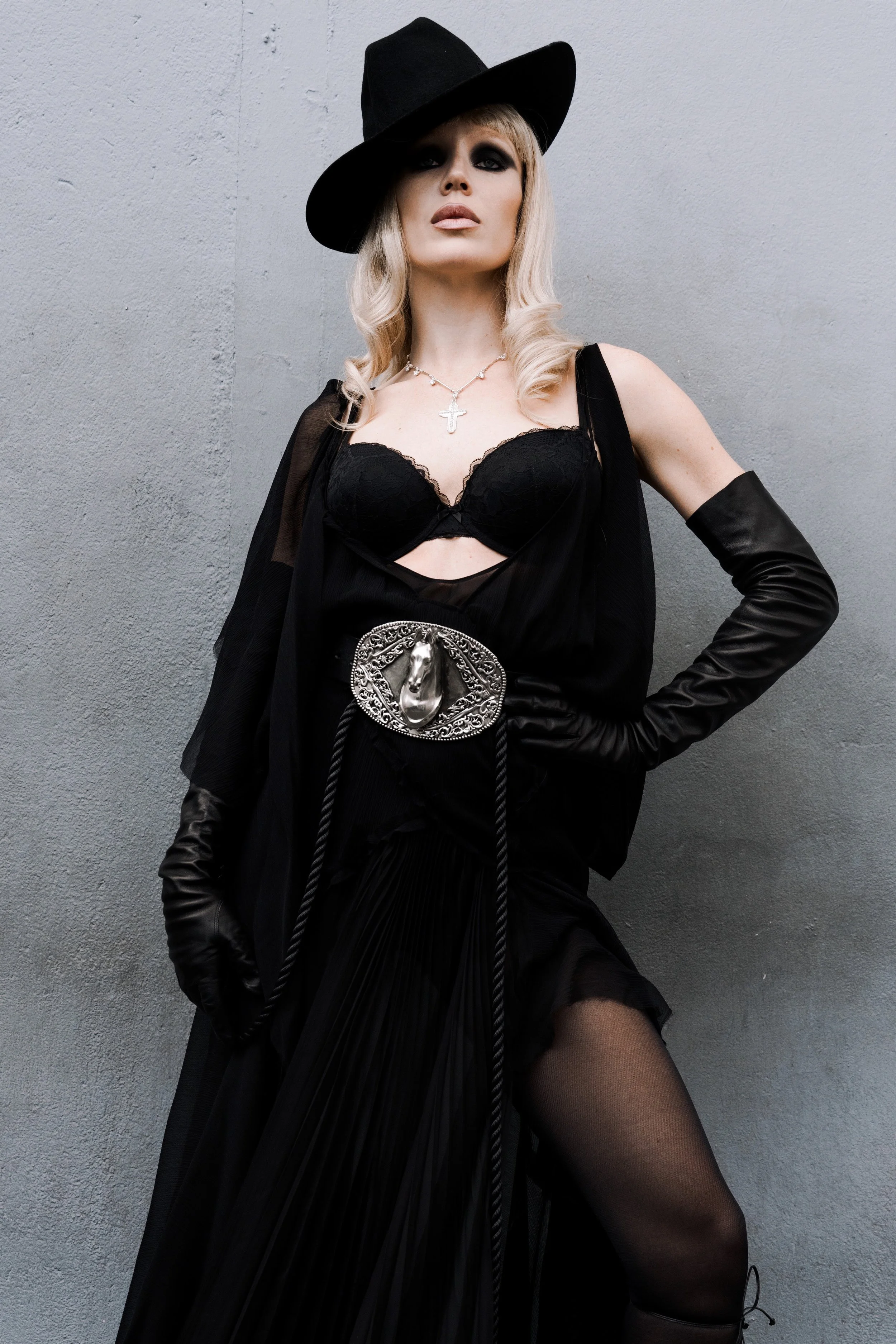
“I feel a responsibility to stay bold. I think that women are being pushed into a strange box again — told to be careful, to tone it down, to be palatable. I am not interested in that.”
KP: You recently released your sophomore album, JAWBREAKER. How do you feel this project builds on or diverges from your debut work? What can we expect from it?
SQ: This album feels like the next level of who I am as a songwriter. I took more time on it than my first album, picking only the songs that truly fit the JAWBREAKER era. It leans more into disco, cold wave, and Italo disco influences, and I chose to use less autotune so my voice feels more raw and direct. It is playful, dramatic, and a bit darker, but always me — a mix of nostalgia, emotion, and energy that I hope draws people into my world.
KP: What themes or stories did you find most central to JAWBREAKER, and how do they reflect where you are in your personal or creative journey?
SQ: JAWBREAKER is about transformation, desire, and self-discovery. It mixes fiction and fantasy with real emotions, taking listeners through love, heartbreak, strength, and moments of wild freedom. The album reflects where I am creatively — exploring different sounds, blending genres, and leaning into vulnerability while owning my power. It is about chasing connection, embracing who you are, and finding freedom in a chaotic world.
KP: Do you have a favorite track off the record?
SQ: I love “Love Fountain.” I almost didn’t include it because it made me feel exposed. I had never made a slow, sad song before. But in the end, it became the perfect way to close the album — a sincere and intimate moment that balances out everything else. I made it almost by accident on the omnichord, which makes it feel like a happy mistake.
KP: You have collaborated with creatives including Yelle and La Femme. How have these collaborations shaped your sound or performance style? What have they taught you?
SQ: I was super grateful to have opened for Yelle and La Femme. Being the opening act for another artist gives you real experience about life on the road. You learn a lot about professionalism. You get in, you do your soundcheck fast, get on stage, wrap up, and do it again.
KP: You have said you are drawn to things that are extreme and dramatic and have described your music as genre-bending. How do you navigate blending multiple styles while avoiding being pigeonholed?
SQ: I think the trick is not overthinking it. I am naturally drawn to extremes, hard contrasts, bold emotions, high highs and low lows, so blending genres feels instinctive rather than strategic. I am not trying to fit into any particular box. I just follow whatever sound matches the feeling that I am chasing in that moment. As long as the intention is honest, people understand the thread. My voice, my visuals, my sense of drama — that is what ties everything together. The style can shift, but the energy is always unmistakably me.
KP: I am a deeply devoted night person. I often work all through the night, and I am writing this at 2 a.m. I love the night for its mystery, possibility, and sense of rebirth. You have spoken about the night as a powerful metaphor in your work, for inspiration, anonymity, and transformation. How did the nighttime become a central motif in your art?
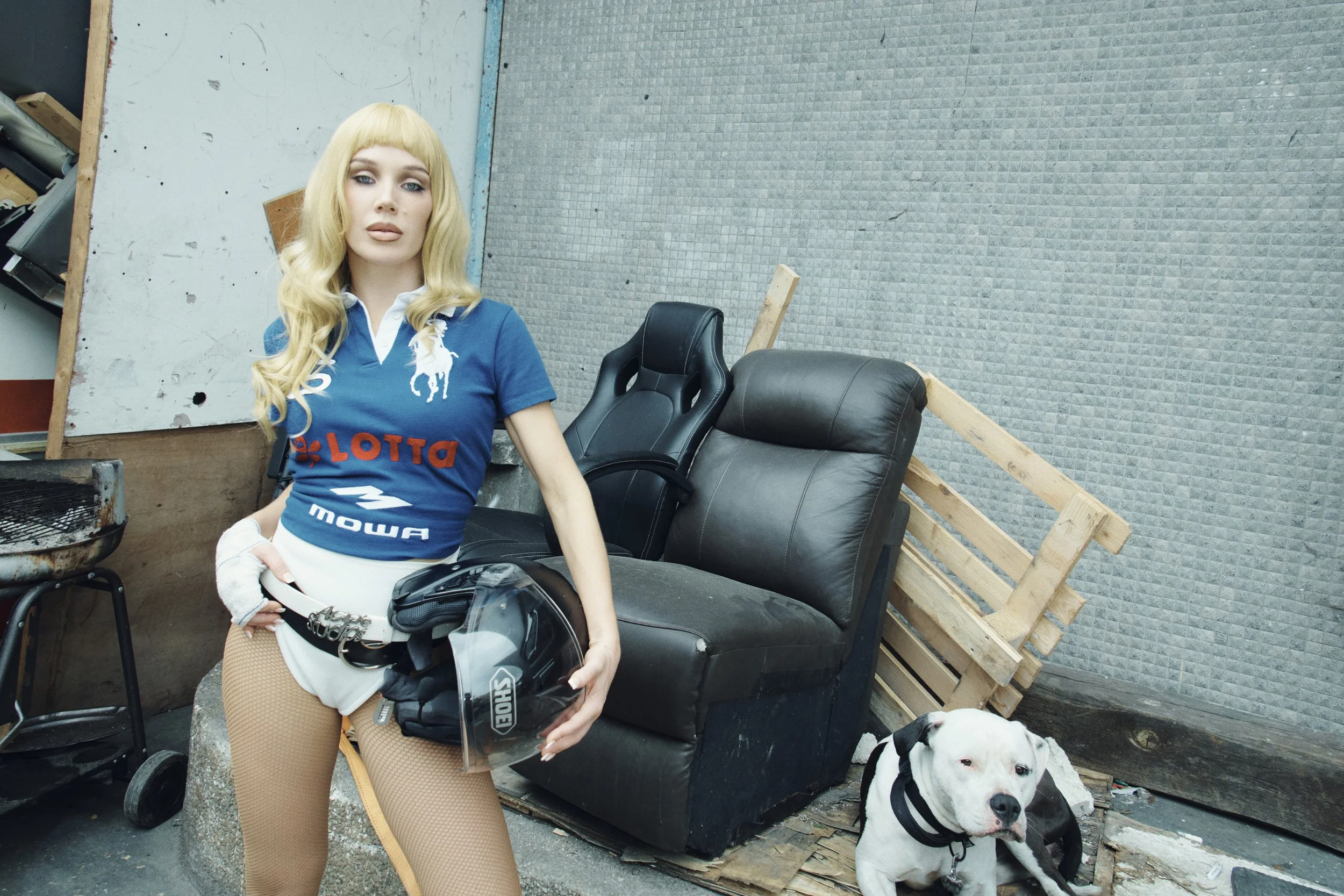
“Do not wait for permission from anyone. Do not dim yourself to make people comfortable. Choose people — in work and in love — who are excited by your fire, not intimidated by it. Life gets a lot easier when you stop negotiating your power.”
SQ: I am honestly just a creature of the night. I have always had my best experiences after dark — the people, the energy, and the strange moments that you never get in the daytime. When I moved to Paris that became even stronger through the clubs, the cabarets, the characters you meet, and the feeling that you can slip into a different version of yourself. People are more themselves at night. That sense of freedom and possibility naturally became part of my music and the world that I create.
KP: Your single “Valentine” has been described as a love letter to the LGBTQ+ community. How do you see your role, if any, as an artist within queer cultural discourse? And more broadly, given how expansive and boundary pushing your work is, do you view your music or visuals as inherently political?
SQ: I have always felt safest and most myself in queer spaces. My closest friends, my earliest supporters, they all come from that community. “Valentine” was a genuine expression of love and gratitude for a community that has given me so much. It is a song about loving yourself and loving others without labels or limits.
KP: As a female creative navigating increasingly puritanical times, what role or responsibility do you feel you have right now, both in your art and in the wider cultural conversation?
SQ: I feel a responsibility to stay bold. I think that women are being pushed into a strange box again — told to be careful, to tone it down, to be palatable. I am not interested in that. I want to keep making work that is sensual, dramatic, feminine, and chaotic — whatever feels true. If anything, the current climate makes me want to push harder. My responsibility is to be an example of someone who refuses to shrink.
KP: How has your identity, including gender and self-expression, influenced or shaped your work and public presence?
SQ: I mix masculine and feminine energy in everything that I do — my performance, my work, my music. It is not something that I plan out. It is just who I am, and that balance shows up naturally in my art because it is how I move through the world.
KP: What would you tell your younger self?
SQ: Trust your gut. It is all going to work out exactly how it is supposed to.
KP: What advice would you give to women about life, work, or love?
SQ: Do not wait for permission from anyone. Do not dim yourself to make people comfortable. Choose people — in work and in love — who are excited by your fire, not intimidated by it. Life gets a lot easier when you stop negotiating your power.
KP: What do you feel makes a provocative woman?
SQ: A provocative woman is someone who owns herself, her desires, her flaws, her strength, and her softness without apology. It is not about shock value — it is about honesty. Real provocation is a woman who knows who she is and refuses to hide it.
Photography: Isaac Brown, Erwan Black, Isaac Brown