Peaches on Politics, Power, and <em>No Lube So Rude</em>
Since emerging in the early 2000s with her breakthrough album The Teaches of Peaches, Peaches has consistently defied genre expectations by blending performance art, electro-punk, and the most radical politics of desire. Her work has carved out vital space for queer, trans, and feminist voices in alternative music — not just as an influence, but as a direct challenge to the binaries and constraints of the cultural mainstream.
Peaches’ legacy is one of provocation that informs empowerment: a relentless commitment to bodily autonomy, sexual agency, and social critique that has inspired generations of artists and audiences alike. Across her catalog, she dismantles the shame placed on pleasure and reclaims it as a site of strength, resistance, and community.
More than a decade since her last full-length record, Rub (2015), Peaches returns with No Lube So Rude, a bold exploration of aging, desire, and political friction. Across eleven electrifying tracks, she continues to push boundaries — blending personal narrative with broader cultural struggle, celebrating desire at every stage of life, and insisting that authenticity and pleasure remain potent sites of resistance in an increasingly polarized world.
With fearless clarity and razor-sharp intent, No Lube So Rude not only adds a provocative new chapter to the Peaches discography, but reaffirms her enduring importance as an artist who constantly reimagines what it means to be powerful, visible, and unapologetically alive.
KP: I like to start these chronologically when I can, which made me think back to the first time I ever came into contact with your work. As a gay, tremendously bullied young girl, my escape in pop culture at the time was Pink, who I feel gave all of us little rejects a home back then, especially in the exclusionary world of 2000s pop. You had a song with her on her record Try This called “Oh My God.”
PEACHES: Yeah!
KP: And if there was any pop girl back then who would introduce you to that world of teenage girls, it would be her, so I’m very grateful for that. Naturally, I would have discovered it on my own when I was a little bit older, but I’m fortunate that I came across you that young.
PEACHES: How old were you?
KP: I was 10, maybe.
PEACHES: Oh, my god. Young. Very young. [Laughs]
KP: [Laughs] But not too young! That’s what this question is about. Your newest record, No Lube So Rude, heavily explores the push and pull of aging for women, which I want to delve into in a second, but the opposite end of that spectrum is youth.
The first time I spoke with Lydia Lunch, I told her that the first time I came into contact with her work was when I was 13, which I half-jokingly said might have been a little too early. She looked me in the eye and said, “That’s when I think most girls should discover my work.” I stopped laughing. I went home and really thought about that. So often we hide young girls from themes or topics that we find “inappropriate,” but perhaps when they’re young is when they need to be educated and empowered the most.
PEACHES: Definitely.
KP: This is pretty open-ended, but as we continue this conversation along the lines of aging, I wanted to start at the opposite end and ask if you ever think about your impact with youth. Despite so many of the themes your work explores, do you think that girls should find it at the youngest age appropriate? I truly think that’s how we can best build a world of empowered, tough-as-nails women with the utmost confidence.
PEACHES: Young people are given so many images and standards that shouldn’t really shape them in the first place, right? So understanding the full scope would at least give young people a chance to decide for themselves, instead of thinking that this is the standard and this is how it has to be.
That’s how I thought it had to be. It was at a later age that I questioned things, but not really exploring why I was questioning certain standards — bodily standards, the male gaze, certain images, and ways of expressing ourselves.
It’s not that they’re not getting the opposite, it’s just that it’s more normalized. So I don’t think it’s a problem when young people are exposed to Lydia Lunch or me or so many others who can give them an offering and help them navigate who they will become.
KP: I love that and I agree with you. You guys have made me a very powerful woman.
PEACHES: You have made yourself a powerful woman. Remember that.
KP: Thank you, but you’ve helped — that I’m sure of.
No Lube So Rude is your first record in over 10 years, since 2015’s Rub. We couldn’t even begin to recount how much the world has changed since then.
PEACHES: So big.
KP: Right. I think we need you now more than ever. You said, “When the world is friction, lube isn’t a luxury. It’s a necessity.” What does friction look like to you right now, personally and politically? How did that idea become the emotional core of the record?
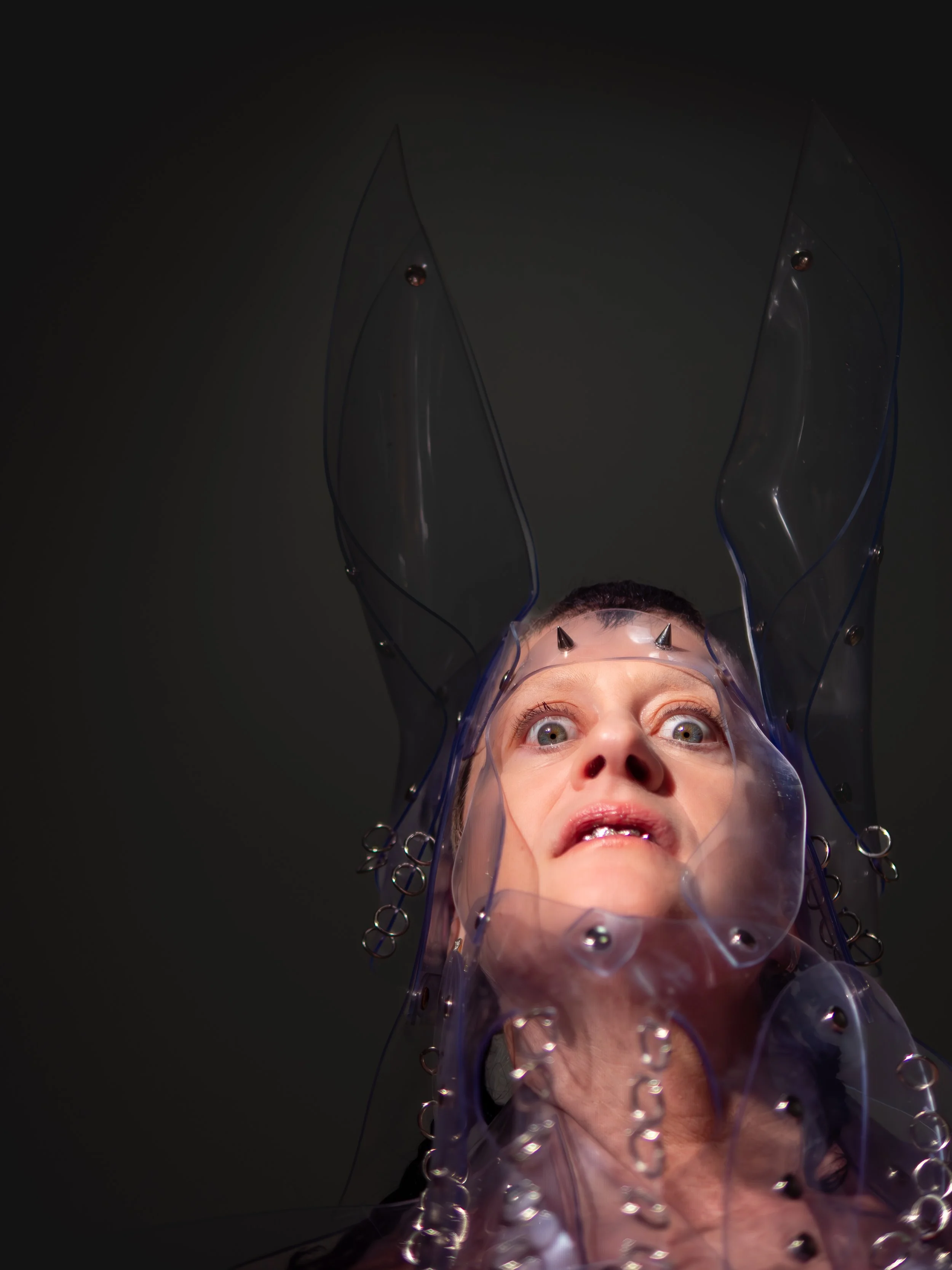
“Even if we have different ideas, we all have to talk about it. We need some magic force like lube that can help us talk it out. We can’t just keep going, ‘fuck you,’ to each other. That’s not working.”
PEACHES: Personally, it talks about the disappearance of older women, of non-breeding women, in terms of having a sense of desire. The friction is also the physicality that happens to your body — dryness, actual friction — and understanding that that is not shameful and not a problem. Using lube is a way to understand that there is a solution. But lube is not just for menopausal women — it’s for everyone. It’s a way of not just getting the job done, but exploring and enjoying — for everyone. It’s consensual. It’s world-building.
As for what the friction of the world is? We’re being pulled apart in every section. White supremacy is going whole-hog on fascist ideas and trying to pull us apart, starting with bodily autonomy — our disabilities, who we are in terms of queerness, transness, intersectionality, disabled, marginalized people — every single person who’s not a white male who can acquire a lot of money and shut everybody out.
It’s really scary, and every day we’re seeing more of it. An executive order was just made about disabled people not having rights because they can’t take care of themselves. It’s an attack on Medicaid and Medicare. It’s this horrible survival of the fittest that wasn’t even a real thing. It’s fucking scary times.
It is tense. It’s tense even between people you care about, where you share certain political ideas and differ on others. We can’t see each other’s perspectives or even talk about it. There’s huge friction. Even if we have different ideas, we all have to talk about it. We need some magic force like lube that can help us talk it out. We can’t just keep going, “fuck you,” to each other. That’s not working.
KP: Absolutely.
When your last album came out, Barack Obama was in office. People were asking if you “really needed to make an album like that.” Then 2016 happened, and while you were still promoting the record, people were saying that we needed it. It changed so quickly.
PEACHES: Yeah. It’s wild.
KP: Songs off the album place the body at the front line of political struggle. How intentional was it to blur the line between personal autonomy and global politics?
PEACHES: That’s my jam. It is completely political. If they can break down our bodies, then they can break us down. If they can take away our rights to gender-affirming care, abortion, disabled bodies — just taking away rights in general — then it’s trying to break it all down. Soon women won’t be able to vote. It’s the fascist playbook. It’s happening.
KP: There’s a strong sense on the record that the body is not just sexual, but spiritual, political, and defiant.
PEACHES: Thank you for saying that. Sometimes people say that it’s so sexual, but I’m using sex as an allegory, for a bigger meaning. The body has a much greater meaning, as you’re saying.
KP: Of course! How has your relationship to your own body evolved since The Teaches of Peaches?
PEACHES: There’s more body awareness as it gets older. Things slow down or get different. You have to work harder. You have to be aware. If you don’t, things are going to come at you. I can’t say that I’m on a great exercise or eating program, but I am aware.
I’m seeing the generations above me and what is happening to their bodies. Your sense of desire is different. Your timing, your ideas of what’s important, like sleep.
KP: You’ve said that it was important to get across the concept that postmenopausal women still have desire. What does it mean to reclaim that narrative so loudly and unapologetically at this stage of your career?
PEACHES: It’s a broader cultural reckoning, but it has to come from a personal place. It won’t resonate otherwise. There’s a strong feeling that older women are speaking out for themselves.
People are living longer. It’s not like when you’re 65, you’re slowing down to the end. People are living to 100. You don’t see it as three quarters of your life; it’s more like four quarters. You have to start thinking about that last section of your life that you didn’t have to think about before.
At my shows, there are young people and a lot of older women rocking out like, “This is my show.” Not, “This is a crazy outing.” It’s more like, “Let’s go.” It’s about giving a place on the dance floor instead of a seat at the table.
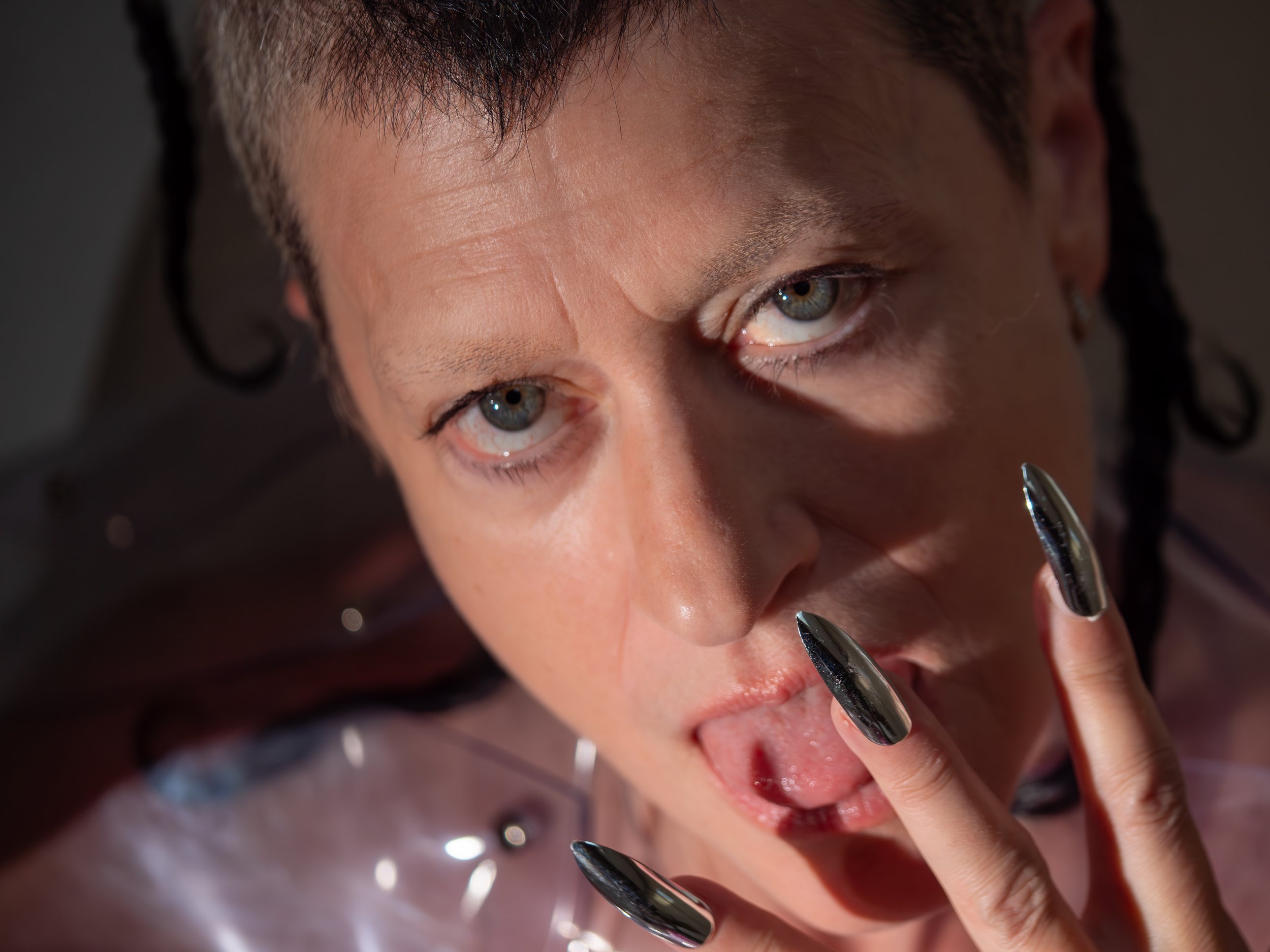
“It’s about giving a place on the dance floor instead of a seat at the table.”
KP: After decades of being labeled “shocking,” you’ve said that the real shock is now reality itself. Has honesty become more radical than provocation?
PEACHES: That’s a good point. Honesty and reckoning with yourself — realizing what is honest about you and what you thought was honesty. In this age of outright lying and calling it truth, we have to be careful of which way we steer our steering wheel.
KP: The album closes with “Be Love,” which feels like a manifesto — less about seeking love and more about embodying it. Why end in softness rather than confrontation?
PEACHES: Because there’s so much confrontation on the album. I saw it as aftercare. It’s a feel-good. I want people to feel good. There’s a lot to deal with, a lot to be excited about, a lot to think about. I want you to go away feeling good about yourself. The revolution needs to be joyful and full of love.
KP: I spoke with Carole Pope not too long ago.
PEACHES: You did?!
KP: I did! We talked about you. She was so happy about your collaboration on “Lesbians in the Forest.”
PEACHES: Oh, we had so much fun.
KP: She’s another iconic performer who has only gotten more radical and badass with age. Do you feel that aging has allowed you to push further artistically or politically? Were there women you saw who inspired you to keep going?
PEACHES: Yoko Ono was a big example. The work that she was doing into her 80s was more radical and powerful — just by showing up, it’s radical.
I don’t think my age is radical anymore. It should be a standard by now.
KP: I also spoke with Rita Lukea from Pixel Grip, who will be touring with you. I love their work. Who are younger artists that you see carrying the Peaches torch forward?
PEACHES: People like Arca, Cortisa Star... So many musicians are speaking out. I’m in love with Lambrini Girls and how they stand up. Amy Taylor from Amyl and the Sniffers, too. It feels good.
KP: What would you tell your younger self?
PEACHES: I wouldn’t really say anything, because things happen organically. If I had pushed myself differently, maybe it wouldn’t have been self-exploration.
Actually, maybe I would tell myself to read more important women’s works. Read bell hooks at an earlier age. But I didn’t, and that’s okay.
KP: What advice would you lend women about life, work, or love?
PEACHES: Check in with yourself. Feel like you are giving yourself what you need, in a deeper way. Find that deeper need and figure out how you can first be of service to yourself — and then to others.
KP: What do you feel makes a provocative woman?
PEACHES: A woman who speaks. Just being a woman is provocative in so many ways. So much is placed on women. It’s always a different perspective. Just by virtue of being women, we are provocative.
Photography: The Squirt Deluxe