Few artists embody contradiction quite like SIIICKBRAIN. Brutal yet vulnerable, confrontational yet deeply introspective, her work exists in the liminal space where rage becomes liberation, vulnerability becomes power, and womanhood is reclaimed as both spectacle and weapon.
Since independently launching her career in 2020, the North Carolina-born artist has built a fiercely singular world that refuses easy categorization, blending industrial rock, hip-hop, electronic music, and experimental pop into a sound that is equal parts confrontational and cathartic.
Her emergence was born from profound personal loss, with music becoming both an outlet for grief and a vehicle for survival. Across projects like My Masochistic Mind, SIIICKBRAIN transformed pain into purpose, earning a devoted following drawn not only to her sonic intensity, but to her unwavering commitment to authenticity. Rather than conforming to an industry that often rewards women for being easily marketable, she has remained steadfast in protecting her autonomy — creatively, visually, and personally.
With her latest release, HOUNDSTOOTH, SIIICKBRAIN enters a markedly different chapter. The album trades relentless darkness for experimentation, movement, and joy, embracing a genreless landscape that reflects an artist no longer interested in predefined boxes. It is the sound she has long been searching for: freer, more instinctive, and deeply self-assured.
KP: You’ve spoken about growing up in a conservative environment in North Carolina where you “didn’t fit in.” How do you feel that tension informed your work and shaped the woman and artist that you are now?
SIIICKBRAIN: I think I just grew to accept it and then leaned more into it as I started discovering my sound more. At a point, I just got comfortable with not fitting in. Then, as I lived in New York and Los Angeles after growing up in North Carolina, being myself and not shifting to any norms was more celebrated, which made me more confident in my decision-making as an artist.
KP: What do you feel “not fitting in” taught you about autonomy as a woman in creative spaces?
SIIICKBRAIN: Not fitting in taught me that autonomy is one of the most valuable things that you can protect as a woman in creative spaces. A lot of environments subtly reward women for being agreeable, easy to categorize, or easy to market. I realized pretty early on that the more I tried to fit in with those expectations, the further I got from who I know I am.
KP: You’ve been very open about your past struggles with agoraphobia, which I share as well. It’s something that so few people truly understand. I recently watched an interview with you where the interviewer asked how you knew you had it, which kind of made me laugh. It’s like, how do you not know that you have it?! You literally can’t leave the house! [Laughs]
But seriously, as we both know, it impacts your life in so many incredibly paramount ways. I lost almost a decade of my life to it in some form or another. I went almost three years without ever leaving my street — going any distance further than a minute away felt absolutely impossible to me at the time.
Mine was brought on by a medical condition called hyperPOTS, which sends loads of adrenaline throughout your body while you’re upright. Once I was properly diagnosed with that, all the newfound panic attacks that I never experienced prior finally made sense chemically — we had something to fix. Thankfully, I was able to get on a beta blocker that completely stopped the adrenaline dumping, but I still wish the diagnosis came a hell of a lot sooner than it did. To be a prisoner in your own home is something that I would never wish upon anyone.
I remember being in the depths of it, though, and I felt like no one could relate — when you’re there, it actually feels like there’s no way out. I didn’t know if I would ever be able to actually live “normally” again. I wished that there were more people who understood what I was going through, as well as the severity of it.
So I wanted to ask — for those who may still be struggling — what was your experience with it like, and what helped you overcome it?
SIIICKBRAIN: I am so sorry that that happened to you. I actually got diagnosed with POTS last year and faced similar feelings about it, but I think knowing how to overcome something like agoraphobia — which I got through when I was younger — made it easier for me to cope with the physical and mental challenges that come with it.
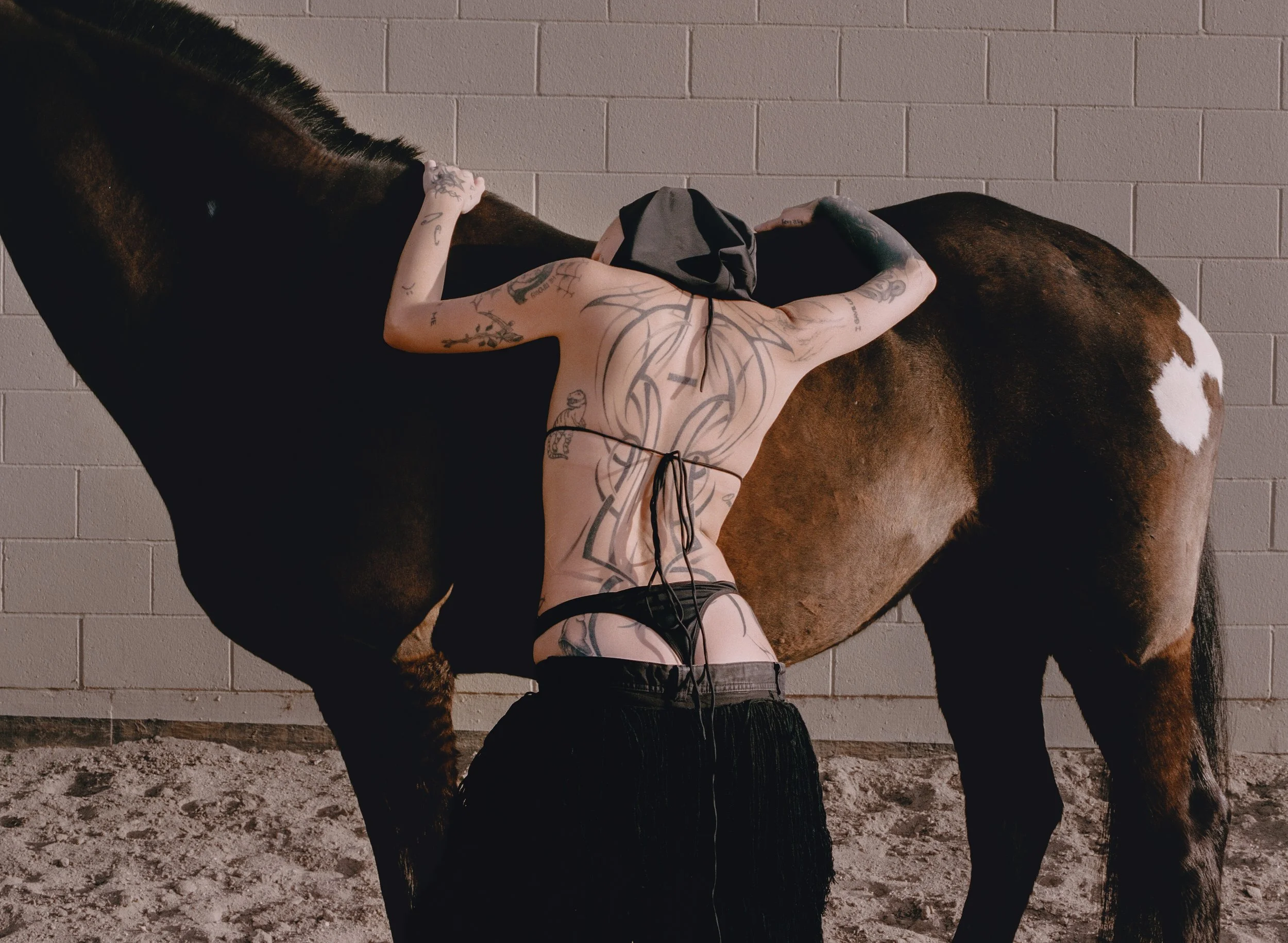
“When I say ‘I am a god,’ I’m not necessarily referring to myself. This project is mainly for the girls and the LGBT community, so it’s truly for all of us to sing and remind ourselves of our strength and everything that we’ve grown through.”
KP: Oh, no! I’m so sorry to hear that. It sucks so bad, but I’m happy that you have a great toolkit for it. That’s key.
SIIICKBRAIN: Well, I always tell anyone who’s struggling that getting through the day is a win, especially when things are really tough. But there comes a point when you want to experience things in life and you have to push through. I just challenged myself each day to do a little bit better than the day before. Eventually, I taught myself that I was strong enough to handle all of the things that I needed to. Now, when I’m faced with challenges, I just take it one step at a time and give myself some grace with it. I know that I can get through it, and so can anyone else when they find the best support system for themselves — whatever that may be. Therapy also helped provide me with tools to get through the really hard parts.
KP: I’m so happy that you recovered. The only way out is through.
You started releasing music independently in 2020 after a deep personal loss. How did grief inform your earliest voice? Do you feel it’s something that you still carry with you through your creative process?
SIIICKBRAIN: Losing someone so close to you can be so rattling — it makes everything else in life seem so small. The fear that I had surrounding my pursuit of music felt like nothing compared to the feeling of that loss. I was also reminded that life is so short, so we should all be doing the things that we want to.
In terms of finding my voice, I always knew that I could scream, so that was kind of the easiest path to take. It also felt really good to just scream. It was healing for me. I think I’m going to continue to scream forever, but it’s just a matter of what each song calls for.
On this upcoming project, I didn’t feel like it was necessary on the majority of the songs. I was also just in this great headspace of having fun and exploring different vocal performances.
KP: Your world is so all-encompassing as an artist — it truly feels like both your image and your sound invite listeners deeply into it. You feel inseparable from your art. Do you see SIIICKBRAIN as an alter ego or the truest version of yourself?
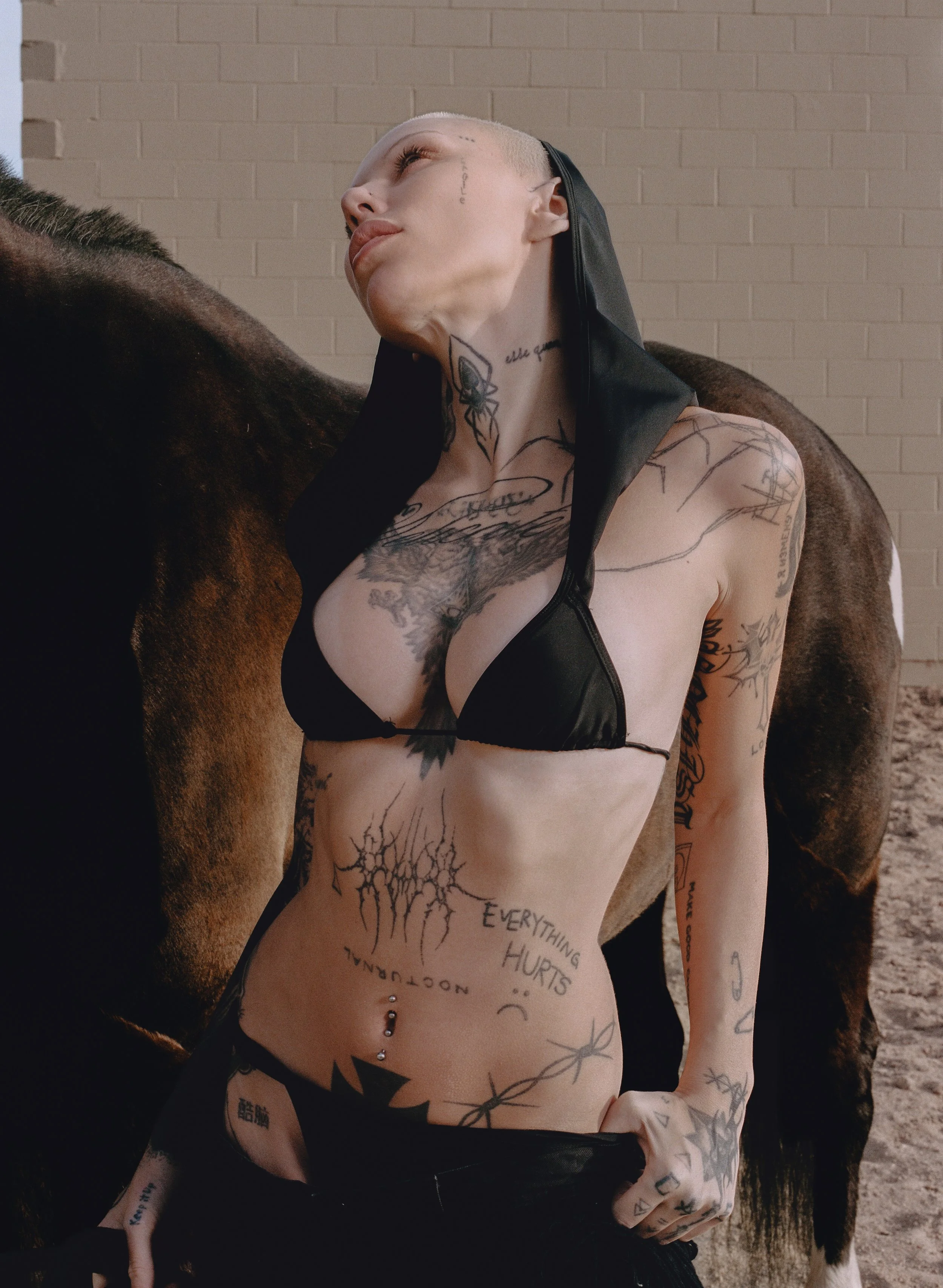
“A lot of environments subtly reward women for being agreeable, easy to categorize, or easy to market. I realized pretty early on that the more I tried to fit in with those expectations, the further I got from who I know I am.”
SIIICKBRAIN: I feel like now I am SIIICKBRAIN, but in the past it felt like it was more of an alter ego — an escape to a version of myself that was stronger.
KP: That’s so cool. I really love that.
You’ve described your art as a form of therapy in the past. Does it still feel just as therapeutic for you, and, if so, what wounds are you still actively processing through your music?
SIIICKBRAIN: I feel like there are times in life when people need therapy to help them cope, and then there are other times in life when people take a break from therapy. I’m currently taking a break from therapy in real life and also taking a break from letting the music be my therapy.
I’m just having fun with it, experimenting, letting myself be happy, and living in that. The world is such a dark place right now — I couldn’t bring myself to feed into that for this project even though, at times, it did seep through the cracks.
KP: Your visuals often explore the female body as both spectacle and a weapon, which I very deeply connect to. What are you reclaiming through that imagery?
SIIICKBRAIN: Autonomy, femininity, our bodies in general. They’re ours to do what we want with. We celebrated who we are in what I think is a beautiful way. Unfortunately, we aren’t always granted that freedom, but in the world that I want to live in, we are.
KP: You seem so self-determined and strong in both your body and your image. How do you protect your sense of self in an industry that often commodifies female identity?
SIIICKBRAIN: I’m really picky about which men I keep around and what teams I work with. I also always make it a point to have control over sound and visual identity when working with people. I love collaboration, input, and constructive feedback, but I don’t do well when I’m not in control.
KP: Your latest release, “Murky Water,” explores anxiety, identity, and a kind of self-aware god complex. What emotional state were you in while writing it?
SIIICKBRAIN: I was comfortable! Just remembering where I came from and who I’m becoming. When I say “I am a god,” I’m not necessarily referring to myself. This project is mainly for the girls and the LGBT community, so it’s truly for all of us to sing and remind ourselves of our strength and everything that we’ve grown through.
KP: The industry often rewards women for their breakdowns as long as they’re aesthetically driven — which is a whole issue in and of itself, one that I’m sure we could talk about at length. That said, your work is very charged. Have you felt pressure to make your pain consumable? If so, how have you dealt with it?
SIIICKBRAIN: I guess I haven’t really thought about making my pain consumable because most of the songs that have been more emotional have been more for me. If people relate to it and feel less alone, then that is an amazing reward for processing my own emotions through music in a healthy way.
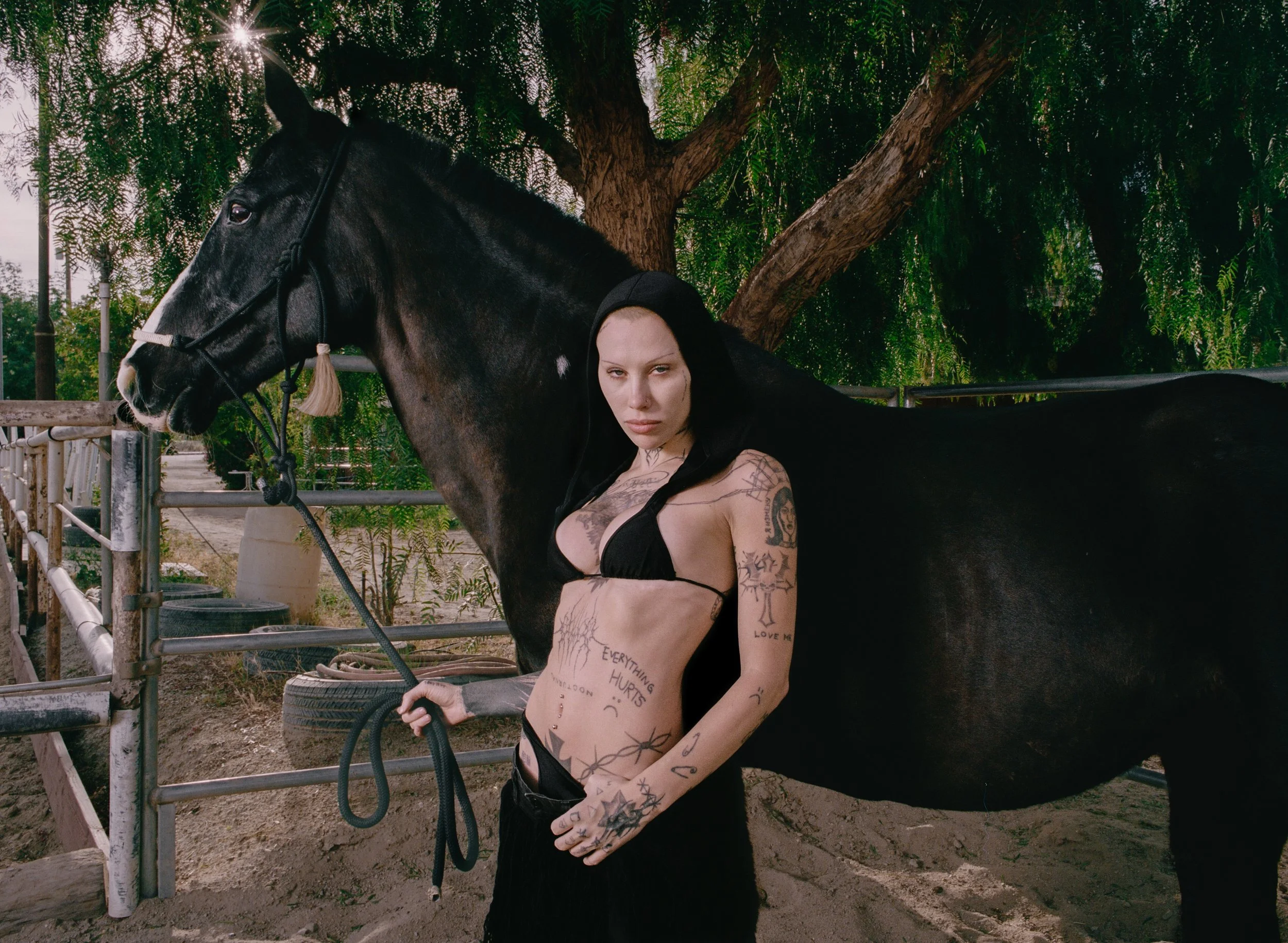
“Take risks. Do everything that you want to do, but do it with care — and with the people who love you back.”
KP: You’ve said that your forthcoming record, HOUNDSTOOTH, feels like the sound that you’ve been searching for. What did you finally unlock in its process?
SIIICKBRAIN: I think it was all about exploring and taking risks, both production-wise and writing-wise. I feel like, at a point, my music was sounding very commercially rock, which just doesn’t feel like me — as we spoke about earlier, I’ve never wanted to be inside of any sort of box. This project is completely genreless; it’s hard to categorize. I also feel like I’m a hard person to categorize in general, so I guess it makes sense that I feel this way. But also, my tastes have changed so much as I’ve gotten older. I just want to make the type of music that I turn on when I want to feel my best, which typically is dance, experimental pop, or hip-hop. I feel like all of that mixed together is what this project is.
KP: What did you have to confront about yourself to make this your “most honest” project yet?
SIIICKBRAIN: I think maybe it feels the most honest because it all came extremely naturally to me, like breathing. In the past, I felt like there was a lot of overthinking and deep processing of emotions going on through my writing. You will notice a big difference in the energies when you listen to my old music versus my new project.
KP: How else do you feel this album differs emotionally from your debut, My Masochistic Mind?
SIIICKBRAIN: It’s much higher energy, more fun, and less dark — you can tell that I have grown both as a person and an artist.
KP: What would you tell your younger self?
SIIICKBRAIN: That she’s doing everything right. I obviously wasn’t, but I’m so grateful for where I am and the journey that I’ve taken, so I really wouldn’t change a thing. I’ve learned a lot from living, and I’m proud of that.
KP: What advice would you lend to women about life, work, or love?
SIIICKBRAIN: Take risks. Do everything that you want to do, but do it with care — and with the people who love you back.
KP: What do you feel makes a provocative woman?
SIIICKBRAIN: Strength.
Photography: Vixxion